





The Engine Is Almost Too Powerful
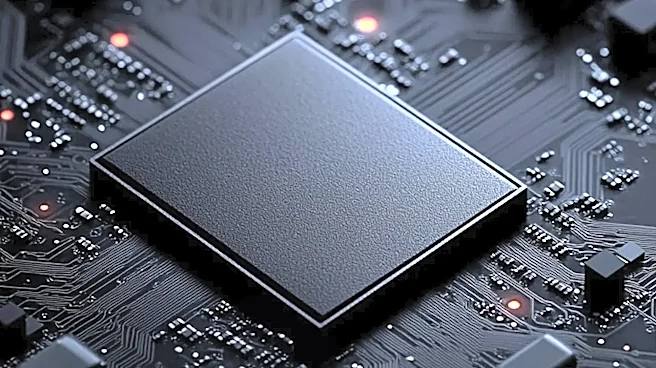
For the past few years, the story of AI has been a story about Nvidia. The company's powerful GPUs (Graphics Processing Units) became the essential, and often scarce, ingredient for training and running artificial intelligence models. Their recent earnings
reflect this dominance, with data center revenue catapulting to $89 billion for the quarter, a 117% increase from the prior year. This incredible growth was driven by hyperscalers and enterprises snapping up every chip they could get. But the AI boom has always been a story of rolling bottlenecks. First it was a shortage of GPUs. Now that supply is catching up, the problem is shifting from the engine itself to the rest of the car.
The New Chokepoint: Networking
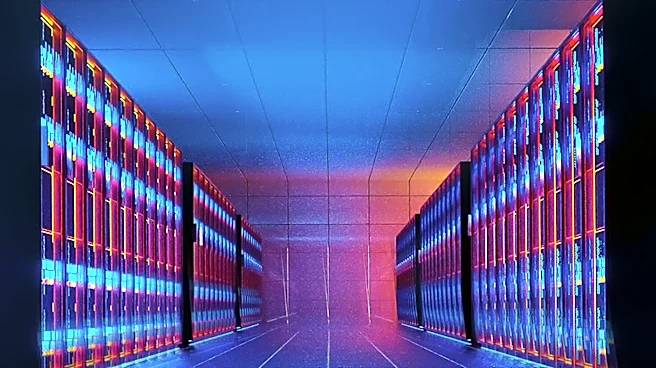
An AI data center isn't just a warehouse full of powerful chips; it's a single, interconnected supercomputer. For tens of thousands of GPUs to work together on a single problem, they need to communicate with each other at lightning speed. If they can't, those expensive, power-hungry chips sit idle, waiting for data. This is where the new bottleneck is emerging: the network fabric. The AI industry is running into a wall where the interconnects—the high-speed wiring that ties all the GPUs together—can't keep up. Nvidia saw this coming. Its $6.9 billion acquisition of networking company Mellanox in 2019 is now paying off handsomely, with its networking division becoming a massive business in its own right, bringing in tens of billions annually. The company is now a dominant force not just in GPUs, but in the InfiniBand and Spectrum-X Ethernet switches that make them work as a cohesive whole.
The Other Physical Limit: Power and Heat
Even with a perfect network, data centers are running into a more fundamental problem: physics. A single rack of modern AI servers can draw over 120 kilowatts of power, a staggering increase from the 8-12 kW that traditional air-cooled data centers were designed for. This creates two massive problems. First, where does the electricity come from? Data centers are now requesting power loads equivalent to small cities, and local grids weren't built to handle such sudden, concentrated demand. Getting new power generation and transmission approved can take years. Second, all that power becomes heat. The level of heat generated by modern AI racks makes traditional air conditioning obsolete. As a result, liquid cooling is rapidly becoming the industry standard, not an optional extra. Projections show that by 2026, over three-quarters of AI servers will be liquid-cooled. Without solving the twin crises of power and heat, all the processing power in the world is useless.
Follow the Bottleneck
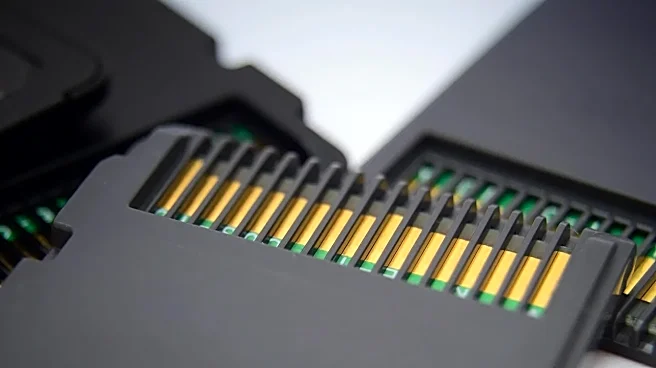
Nvidia's own executives have signaled that supply constraints are moving beyond just the main processor. They've pointed to shortages in high-speed memory as a bottleneck expected to last for years, driven by the same demand surge fueling their growth. This illustrates a core pattern in the AI buildout: the profit and problems are constantly shifting. The investment wave flowed from GPUs to servers, then to cooling systems, and then to the energy grid itself. Now, networking and other key components are in the spotlight. Nvidia's spectacular earnings are a validation of the AI revolution, but they also serve as a roadmap to the next set of challenges. The race is no longer just about building the most powerful chip, but about building the entire ecosystem around it before the whole system grinds to a halt.