






The Public Padlock and Private Key
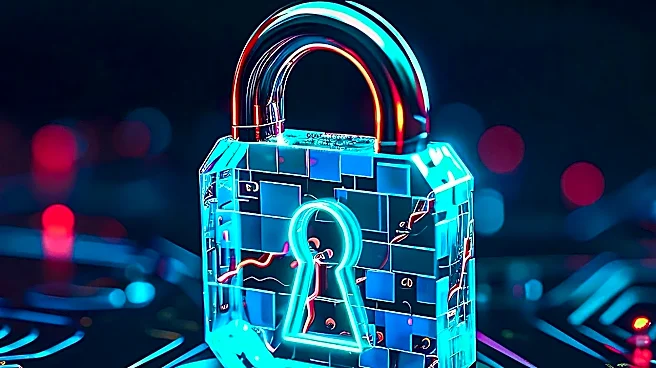
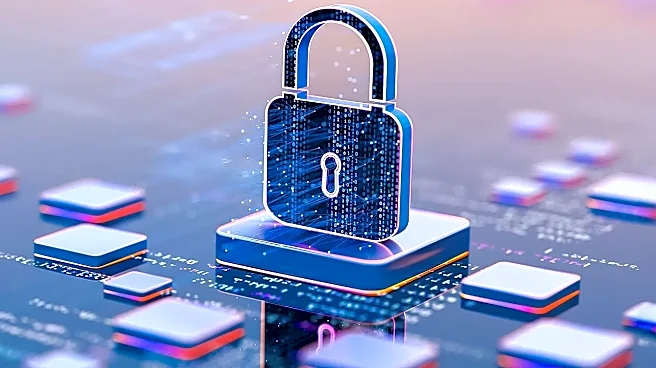
Let's start with a simple analogy. Imagine you want people to send you secret messages in a locked box. The RSA system gives you a special, unbreakable padlock. You can make millions of copies of this open padlock—this is your 'public key'—and give them
to anyone. Anyone can take one of your padlocks, place a message in a box, and snap the padlock shut. Once locked, that box is completely secure. But here's the magic: only you have the one-of-a-kind physical key that can open it. That's your 'private key'. Even the person who locked the box can't open it again. This is the core concept of public-key cryptography: a public key locks, and a private key unlocks. It solves the huge problem of how to securely exchange information without first having to secretly share a key.
The Secret Ingredient: One-Way Math
So, what are these 'keys' in the digital world? They're just very large numbers. The whole system is built on a piece of math that's incredibly easy to do in one direction and nearly impossible to do in reverse. Think about prime numbers—those numbers divisible only by 1 and themselves. It's trivially easy to take two huge prime numbers and multiply them together. A computer can do it in a fraction of a second. But if you only have the resulting product, trying to figure out the two original prime numbers you started with is called factoring, and it is an astronomically difficult problem. This is the 'trapdoor' function at the heart of RSA. Multiplying is easy; factoring the result is functionally impossible for the numbers used in modern encryption. Your public key is related to the giant product of two primes, while your private key is derived from the original primes themselves.
Where 'Simple' Completely Breaks Down
Here is where the simplicity ends. When we say 'large numbers,' we aren't talking about numbers you can write on a napkin. A standard RSA key today is 2048 bits long, which translates to a number with 617 decimal digits. The two prime numbers used to create it are each over 300 digits long. The resulting product is a monstrous number that no computer on Earth can currently factor in a reasonable timeframe. For context, the largest RSA number ever publicly factored was 768 bits long, and it took the equivalent of thousands of years of computing time on a single machine. So while the concept—multiply two primes—is simple, the sheer scale turns it into an unbreakable digital vault. The security doesn't come from a complex procedure but from the brute-force computational difficulty of reversing a simple one.
More Than Just Secrecy
The genius of the public/private key system goes beyond just keeping secrets. It also provides authenticity through something called a digital signature. This process works in reverse: you can use your private key to 'sign' a document or message. Then, anyone can use your publicly available key to verify that the signature is yours and that the message hasn't been altered. This is fundamental to how your browser trusts that a website like your bank is actually your bank (via SSL/TLS certificates) and how secure email systems ensure a message is from the claimed sender. RSA doesn't just lock the box; it also provides a tamper-proof seal that verifies the sender's identity. This dual function of confidentiality and authentication makes it a cornerstone of digital trust.