











The Spec Sheet Showdown
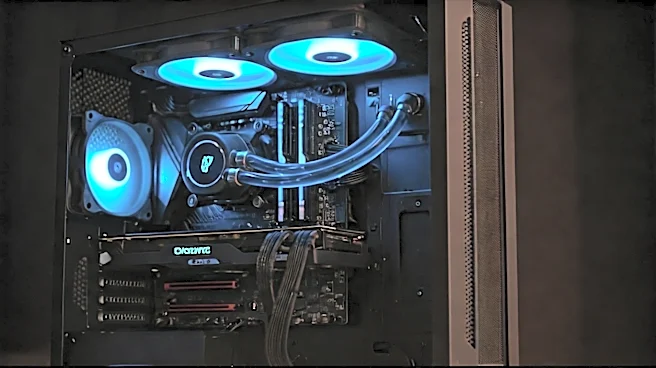
On paper, the battle seems simple. Coolers are rated by their Thermal Design Power (TDP), which is the maximum heat a cooler is designed to dissipate. All-in-one (AIO) liquid coolers often boast higher TDP ratings and larger radiator surfaces, suggesting
they are the undisputed champions of cooling. They work by pumping a liquid coolant to a cold plate on the CPU, carrying heat away to a radiator where fans exhaust it. This efficiency in moving heat away from the processor often translates to lower temperatures in sustained, heavy workloads, making liquid coolers seem like the obvious choice for high-performance CPUs. This leads many to believe that a pricier liquid cooler is always a straightforward upgrade over an air cooler.
The Airflow Factor You Can't Ignore
Here's the first secret the spec sheets don't tell you: your cooler doesn't exist in a vacuum. It lives inside your PC case, and the airflow within that case is arguably more important than the cooler itself. A high-end liquid cooler with its radiator mounted in a case with poor airflow will be starved of cool, fresh air and perform well below its advertised potential. It will simply recycle warm case air, reducing its efficiency. Conversely, a massive air cooler, with its large heatsink and fans, can thrive in a case with a well-designed airflow path, where cool intake air is constantly flowing over its fins. In some instances, a great air cooler in a high-airflow case can outperform a liquid AIO in a choked-off, style-focused chassis.
Heat Density vs. Total Heat
Modern CPUs don't just get hot; they get hot in very specific, concentrated spots. This is the concept of thermal density. While a liquid cooler is excellent at moving a large total amount of heat away from the CPU package and out of the case, a high-end air cooler with a large, polished copper base and multiple heat pipes can be exceptionally good at absorbing the initial, intense spike of heat directly from the CPU's surface. The sheer mass of the metal heatsink acts as a thermal buffer. This is why for tasks with brief, bursty workloads—like gaming—the performance difference between a top-tier air cooler and a standard 240mm AIO can often be negligible.
The Noise and Reliability Equation
Performance isn't just about temperature; it's also about noise and peace of mind. Spec sheets don't have a metric for long-term reliability. Air coolers are elegantly simple: a block of metal and a fan. The only moving part is the fan, which is easily replaceable and has a very long lifespan. Liquid coolers, however, have more points of failure: the pump, the tubing, and the radiator fans. While modern AIOs are very reliable, the risk of a pump failure or a leak, however small, is always present. Furthermore, the type of noise is different. Air coolers produce a consistent fan hum, while liquid coolers can have a low but sometimes irritating pump whine in addition to fan noise.
So, Who Actually Wins?
The winner depends entirely on your build, budget, and use case. Spec for spec, a large, premium liquid cooler will generally outperform a large, premium air cooler, especially under sustained, all-core loads like video rendering. Choose an Air Cooler if: You prioritize reliability, simplicity, and cost-effectiveness. High-end air coolers offer fantastic performance that's more than enough for almost all gaming and general use, often at a lower price and with fewer worries. Choose a Liquid Cooler if: You are a serious overclocker, run sustained heavy workloads, have a high-TDP flagship CPU, or prioritize aesthetics and a clean look around your CPU socket. They are superior at moving heat completely out of the system, which can help keep other component temperatures down as well.