








More Than Just a Late Shipment
When managers think about third-party risk, their minds often go to the most tangible problems: a critical component supplier is hit by a hurricane, a logistics partner’s trucks are delayed, or a key raw material doubles in price. These are significant,
costly disruptions that can halt an assembly line in its tracks. For decades, managing the supply chain was primarily about mitigating these physical and financial instabilities. But this view is dangerously outdated. While a late shipment can cost a day of production, a compromised vendor can cost the entire business. The hidden vulnerability lies in the deep, often digital, integration of modern manufacturing. Your plant doesn’t just receive parts from a supplier; it shares data, connects to their software, and grants them access to sensitive systems for maintenance and monitoring. Each of these connections is a potential doorway for threats that are far more insidious than a simple delay.
The Digital Trojan Horse
The most potent and overlooked third-party risk today is cybersecurity. Your plant can have a state-of-the-art firewall and the best security protocols in the world, but it means little if your HVAC maintenance provider uses a weak, easily guessed password to access your control systems remotely. Hackers know this. They increasingly target smaller, less-secure vendors as a stepping stone to infiltrate their ultimate prize: the large, well-defended manufacturer. This is the digital Trojan Horse of the 21st century. A seemingly benign software update from a trusted vendor could carry ransomware that encrypts your entire operational network, bringing production to a standstill for weeks and demanding a multi-million-dollar payment. A breach at a third-party logistics firm could expose your shipping manifests and customer data, leading to regulatory fines and a collapse in client trust. In a 2021 report, Gartner predicted that by 2025, 45% of organizations worldwide will have experienced attacks on their software supply chains. For manufacturers, whose operations depend on a complex web of interconnected software and hardware, the risk is particularly acute. Your security is only as strong as the security of your most vulnerable partner.
Reputation and Compliance Contagion
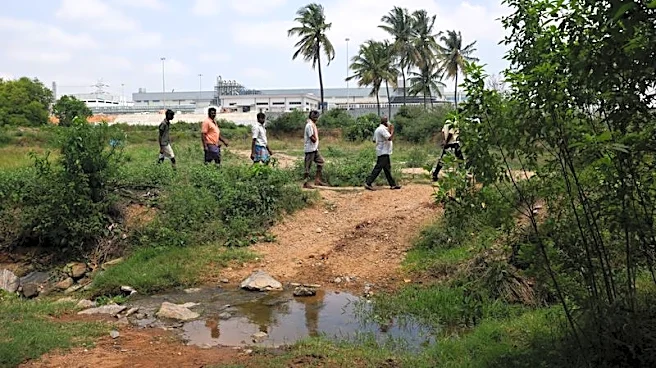
The danger isn’t just digital. Your brand’s reputation is inextricably linked to the actions of every company in your supply chain. If a downstream supplier is found to be using unethical labor practices or violating environmental regulations, the negative press and consumer backlash won’t stop at their door; it will land squarely on yours. In an age of corporate social responsibility and transparent sourcing, customers and investors are holding companies accountable for the entire lifecycle of their products. A single weak link can create a compliance nightmare. Imagine a small parts supplier substitutes a specified material with a cheaper, non-compliant one to cut costs. The defect might not be discovered until your finished product is already in the hands of consumers, triggering a massive, brand-damaging recall. This isn't a hypothetical; it's a recurring scenario that costs industries billions. The vulnerability here is a lack of visibility and control—assuming a partner is meeting standards without rigorous, ongoing verification.
From Vulnerability to Resilience
Addressing these hidden vulnerabilities requires a fundamental shift in mindset. Third-party risk management can no longer be a one-time background check filed away in a cabinet. It must be a dynamic, continuous process that treats vendors and suppliers as extensions of the organization itself. This means moving beyond simple questionnaires. Leading manufacturers are now demanding robust security audits from their partners and writing specific cybersecurity standards into their contracts. They are implementing “zero trust” architectures, where no user or system is automatically trusted, even if it’s already inside the network perimeter. It also involves using technology to gain deeper visibility into the supply chain, tracking materials and compliance in real-time. The goal is not to build impenetrable walls, but to create a resilient ecosystem where a problem with one partner is quickly identified, contained, and managed before it can cascade into a catastrophic failure for the entire operation.