







The Key-Swapping Dilemma
Imagine you need to send a locked box to a friend across the country. You have a padlock and a key, but your friend doesn't have a matching key. If you send the key in the mail, a thief could copy it and open the box when it arrives. If you send the box unlocked,
the contents are exposed. This is the classic key distribution problem that plagued early internet pioneers. How can two parties, who have never met, securely agree on a secret key to encrypt their conversation when their entire communication channel might be monitored? Before 1976, the only answer was to share keys ahead of time through a trusted physical method, like a courier—a solution that was completely impractical for a global network.
A Clever Analogy: Mixing Paint
The solution, devised by Whitfield Diffie and Martin Hellman, is best explained with a simple analogy involving paint. Imagine you and your friend first publicly agree on a common starting color—say, yellow. Anyone can know this. Next, you each secretly choose a private color. You pick red, and your friend picks blue. You never tell anyone your secret color. Now, you both mix your secret color into the public yellow paint. You get a unique shade of orange, and your friend gets a unique shade of green. You then openly swap these new mixed colors. An eavesdropper can grab both your orange and your friend's green paint, but it's practically impossible for them to 'un-mix' the colors to figure out your secret red or your friend's secret blue. Finally, you each add your original secret color to the mixture you just received. You add your secret red to the green paint, and your friend adds their secret blue to your orange paint. The result? You both end up with the exact same muddy brown color (Yellow + Blue + Red). You have now created a shared secret color, even though you never once exposed your private colors. This is the magic of Diffie-Hellman. It allows two parties to arrive at an identical secret—in this case, a number—that can be used as a key for encryption.
The Internet's Secret Handshake
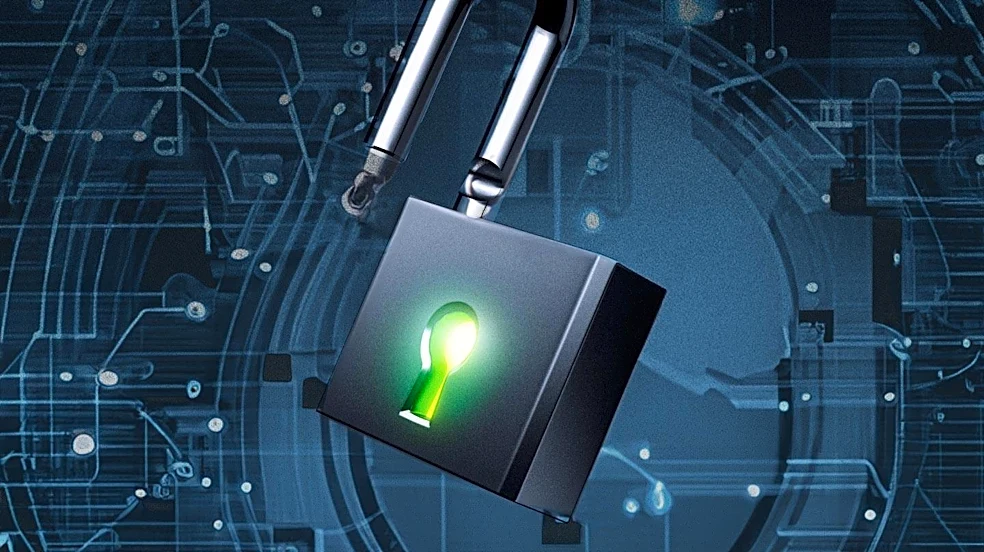
This paint-mixing trick, performed with large numbers instead of colors, happens billions of times a day. It’s a foundational component of Transport Layer Security (TLS), the protocol that puts the 'S' (for Secure) in HTTPS and displays a padlock in your browser's address bar. Before your browser sends any sensitive information to your bank or an e-commerce site, it performs a Diffie-Hellman exchange to securely generate a temporary key for that session. It's also at the heart of many end-to-end encrypted messaging apps, like Signal and WhatsApp, ensuring that only the sender and receiver can read the messages. Virtual Private Networks (VPNs) and Secure Shell (SSH) for remote computer access also rely on this method to establish secure channels.
The Minds Behind the Method
The groundbreaking 1976 paper, 'New Directions in Cryptography', not only introduced this key exchange but also the entire concept of public-key cryptography. For this revolutionary work, Whitfield Diffie and Martin Hellman were awarded the 2015 A.M. Turing Award, often considered the Nobel Prize of computing. Their foresight into a future where everyday communications would happen over vulnerable electronic networks was remarkably prescient. They solved a problem that has become central to national security, global commerce, and personal privacy in the digital age. While British intelligence documents later revealed that government cryptographers had conceived of a similar idea years earlier, it was Diffie and Hellman's public paper that unleashed the concept upon the world, forming the bedrock of modern internet security.