





What Was That Clunky Box?
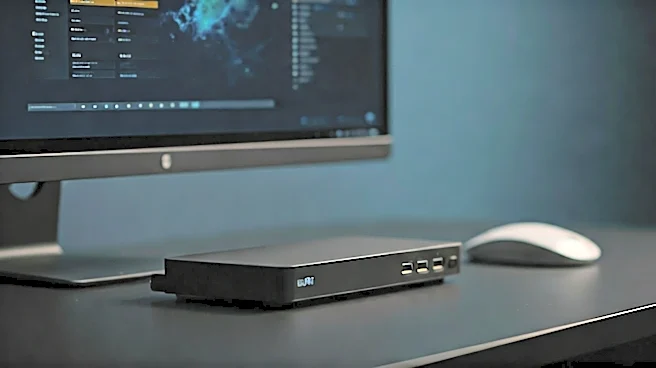
If you worked in IT or were a serious computer hobbyist in the late '90s or 2000s, you know the device. It was a metal or plastic box, covered in chunky VGA and PS/2 ports, with a satisfying 'clunk' sound when you pressed its main button. This was the KVM
switch. The name is an acronym for its function: Keyboard, Video, and Mouse. Its job was simple but revolutionary: it allowed a user to control multiple computers using just one set of peripherals. You could have a Windows PC for gaming, a Mac for design, and a Linux box for coding, all running simultaneously on separate machines but controlled from a single desk, with a single monitor, keyboard, and mouse. With the push of a button, your controls would instantly hop from one computer to the next. It wasn't elegant, but it was powerful.
Born in the Server Room
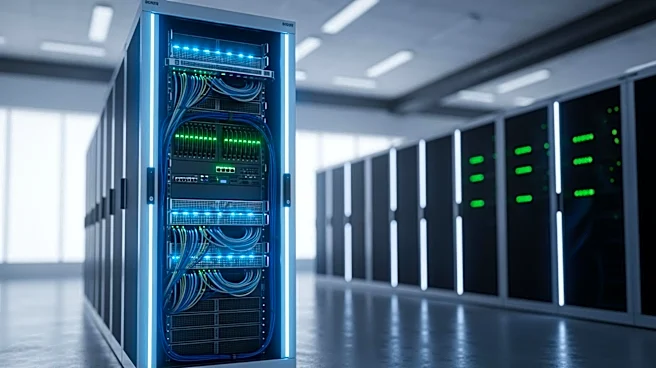
The KVM switch wasn't invented for home office heroes. Its story begins in the cold, loud aisles of corporate data centers. Before KVMs, managing a rack of servers was a physical nightmare. Each server needed its own monitor and keyboard, a setup called a 'crash cart' that had to be wheeled from machine to machine for diagnostics or setup. It was inefficient and expensive. The KVM switch was the enterprise solution. A single rack-mounted unit could let one administrator control dozens of servers from a central console. This was a massive leap in efficiency, saving space, money, and countless hours. It established the core principle that would later migrate to the desktop: one human, many machines, one point of control.
The Power User's Secret Weapon
As computing became more specialized in the late 90s, a new class of 'power user' emerged. These weren't just server admins; they were software developers who needed to test code on different operating systems, graphic designers using both Mac and PC-specific software, or day traders running multiple platforms. For them, running virtual machines was often too slow or unstable. They needed the full, native power of dedicated hardware. The KVM switch became their essential, if unspoken, tool. It allowed them to build a personal command center, seamlessly switching between different worlds without ever leaving their chair. It was the physical manifestation of a digital-first workflow, a bridge between specialized hardware silos.
More Than a Switch: A New Mindset
The quiet revolution of the KVM switch wasn't just about reducing desk clutter. It was about fundamentally changing the relationship between the user and their computers. It decoupled the user's 'interface'—their hands, eyes, and brain—from a single machine. With a KVM, you weren't operating 'the PC' or 'the Mac'; you were operating a *system* of computers from a unified control point. This mental shift was profound. It treated individual computers as resources to be called upon, much like we think of cloud services today. The idea that your identity and workflow could fluidly move between distinct hardware environments was cemented by this humble box. It was the first step toward abstracting away the machine itself, focusing instead on the user's intent.
The Ghost in the Modern Machine
Today, the physical KVM switch is largely a niche product, still used in data centers and by a handful of hardcore enthusiasts. But its spirit is everywhere. When you use Logitech’s Flow technology to move your mouse cursor seamlessly from your laptop screen to your tablet, you are using a software KVM. Apps like Synergy and Barrier do the same thing across different operating systems over a local network. Even the Remote Desktop Protocol, which lets you control a powerful office computer from a simple laptop at home, is a direct descendant of the KVM philosophy. The problem of controlling multiple computers hasn't gone away; it's just that the solution has moved from hardware into software and the cloud. The clunky box has dissolved, its logic now embedded in the very fabric of our modern digital lives.