








Web 1.0: The Static, Read-Only Past
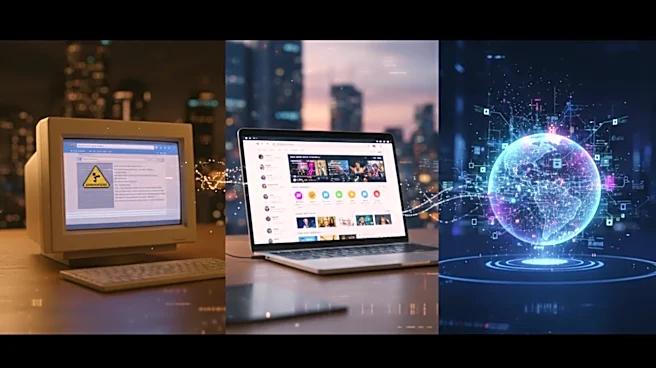
To understand the fight, you first have to know the battlefield. Think back to the early internet of the 1990s. This was Web 1.0. It was a digital library of static, read-only pages built by a handful of creators. You could visit a website, like an early Yahoo!
page or a university site, and consume information. That was about it. There was no logging in, no commenting, no user profiles. It was a one-way street of information, like a global encyclopedia with hyperlinks. On this point, nearly every engineer agrees. It was the simple, decentralized dawn of the web.
Web 2.0: The Interactive, Centralized Present
Starting around 2004, the internet became a two-way street. Web 2.0 is the “read-write” web, defined by user-generated content and social interaction. Facebook, YouTube, Twitter, and the entire app ecosystem are the titans of this era. We, the users, became the creators, uploading photos, writing reviews, and sharing our lives. But this explosion of interactivity came at a cost: centralization. A handful of massive tech companies now own the platforms, control the data, and monetize our engagement. As one observer put it, in Web 2.0, the user became the product.
Web 3.0: The 'Read-Write-Own' Dream
This is where the argument really ignites. Web 3.0, or Web3, is pitched as the next logical step: a “read-write-own” internet. Its proponents envision a decentralized web built on blockchain technology, where users, not corporations, own their data, digital assets, and even a piece of the platforms they use through tokens. The goal is to cut out the middlemen—the big tech companies—creating a more transparent and user-controlled digital world. It promises to be a return to the decentralized roots of Web 1.0 but with the advanced functionality of Web 2.0.
The Core Disagreement: Utopian Idealism vs. Gritty Pragmatism
The fundamental clash among senior engineers is one of philosophy and practicality. One camp sees Web3 as a necessary revolution—a chance to fix the power imbalances of Web 2.0 and build a fairer, more open internet. They see the potential for decentralized systems to empower individuals and break the monopolistic grip of Big Tech. To them, the high costs and technical hurdles are just early-stage growing pains for a world-changing technology. On the other side are the skeptics, many of whom are equally experienced engineers. They argue that Web3, in its current form, is a solution in search of a problem. They point to the fact that blockchain-based systems are often slower, more expensive, and far more complex than their centralized counterparts. Many see the space as dominated by financial speculation, scams, and marketing hype, rather than genuine solutions to real-world problems.
A Battle Over Feasibility and Control
Skeptical engineers often argue that true decentralization is a pipe dream. They see that even in the Web3 world, centralization creeps back in through user-friendly interfaces like Coinbase or NFT marketplaces like OpenSea, which act as de facto gatekeepers. Furthermore, they raise valid concerns about the environmental impact of some blockchains, scalability issues that lead to sky-high transaction fees, and the abysmal user experience that keeps mainstream adoption at bay. For these pragmatists, the messy, imperfect, but highly functional centralized systems of Web 2.0 are simply a better way to build products for billions of people. They believe that many of Web3's supposed benefits are technologically incoherent pipe dreams that ignore the hard-won lessons of the last 30 years of software development.