



The Lock and Key You've Never Seen
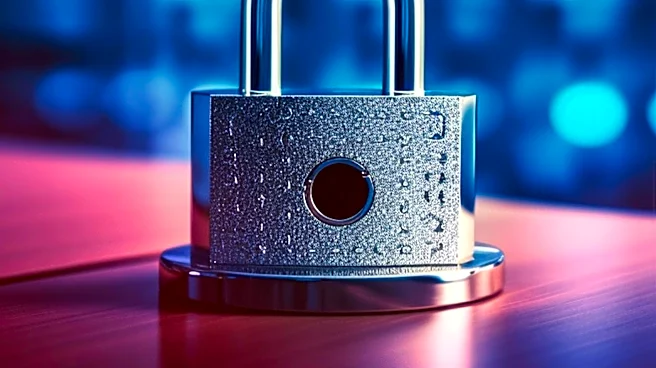
At its core, RSA is a form of 'asymmetric cryptography', which sounds complex but boils down to a simple, brilliant idea. Imagine everyone has a special padlock that only they have the key for. You can make millions of copies of your open padlock and
give them to anyone. This is your 'public key'. If someone wants to send you a secret message, they put it in a box and snap your public padlock on it. Once locked, the only thing that can open it is your unique 'private key', which you never share with anyone. This solves a huge problem in cybersecurity: how to share secret information without having to first securely share a secret key. With RSA, the key for locking (public) is different from the key for unlocking (private).
Security Built on 'Hard Math'
The reason this padlock system works is based on a piece of math that's easy to do one way and incredibly difficult to do the other way. RSA's security relies on the challenge of factoring large numbers. It's simple to take two huge prime numbers and multiply them together to get an even more massive number—a computer can do it in a fraction of a second. This massive number is part of your public key. However, if you only have the massive number, trying to figure out which two original prime numbers created it is extraordinarily hard for even the most powerful conventional computers. Your private key is derived from those original primes. So, while the world can see the product, only you, with knowledge of the original factors, can unlock the message.
The Unseen Workhorse of the Internet
RSA encryption, first publicly described in 1977 by its creators Ron Rivest, Adi Shamir, and Leonard Adleman, is everywhere. When you see a padlock icon and 'https' in your browser's address bar, RSA is often part of the process that secures your connection to the website. It's used in Virtual Private Networks (VPNs) to establish secure tunnels for your internet traffic. Many email systems use it to encrypt messages or create digital signatures, which prove a message hasn't been tampered with and truly came from the sender. This digital signature function works in reverse: you use your private key to 'sign' a document, and anyone can use your public key to verify that signature is authentic.
A New Challenge on the Horizon
For decades, RSA has been a pillar of digital security, but a new technological frontier poses a future threat: quantum computing. A sufficiently powerful quantum computer could theoretically break RSA's 'hard math' problem, making it possible to factor those large numbers and derive a private key from a public one. This threat has prompted a global race among cryptographers to develop and standardize 'post-quantum' or 'quantum-resistant' algorithms. While today's RSA (with sufficiently large keys) remains secure against current computers, the industry is proactively preparing for a future where today's encrypted data could be harvested now and decrypted later by a quantum machine.