





What Is On-Device AI, Anyway?
Think of it as the difference between asking a question and having the answer pop into your head versus having to call someone for it. For years, most heavy-duty AI—like the kind that powers complex chatbots—has run in the cloud. Your phone sends a query
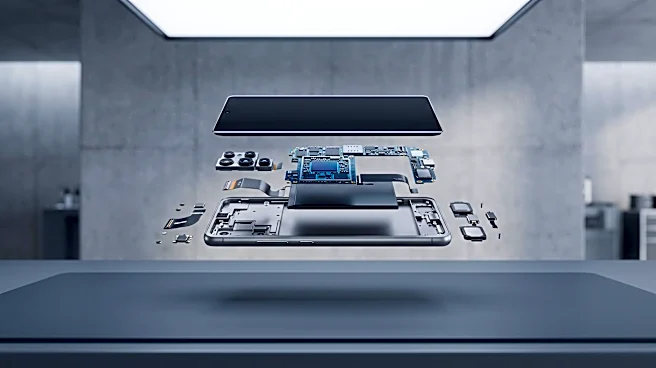
to a massive data center, a powerful server processes it, and the result is sent back. On-device AI, as the name implies, does the work right on your iPhone. This is made possible by a specialized part of the phone's processor called a Neural Engine, a chip designed specifically for the mathematical operations that form the backbone of artificial intelligence. Instead of outsourcing its thinking, your phone is finally smart enough to handle a surprising amount of it on its own.
The Privacy and Speed Imperative
The two biggest advantages of this local approach are speed and privacy. Because your data doesn't have to travel to a server and back, the response is instantaneous, which is critical for real-time features like live language translation or advanced camera effects. More importantly, it aligns perfectly with Apple's long-standing focus on privacy. When your personal information—your photos, messages, and health data—is processed directly on the device, it never has to leave your control. This offers a powerful security guarantee that cloud-based services, which require your data to be sent elsewhere, inherently cannot match. For a company that has made privacy its core differentiator, making AI personal and local is a strategic masterstroke.
It's About a Smarter Chip, Not Just a Faster One
For years, Apple's A-series chips have led the industry in raw performance. Now, the focus is shifting to AI-specific muscle. The Neural Engine inside the latest iPhones is capable of trillions of operations per second, a metric that has grown exponentially with each generation. This dedicated hardware is crucial because running complex AI models on a standard CPU would be incredibly slow and drain the battery. By designing its own silicon, Apple can tightly integrate the Neural Engine with its software, creating a seamless and efficient system. This allows the iPhone 18 to run sophisticated AI features—like predictive text that understands context, intelligent photo editing, and a much smarter Siri—without compromising speed or battery life.
Rewriting the 'Event Math' for a New Era
This brings us to the "event math." In the past, the value of a new iPhone was often measured in tangible, easy-to-compare specs: a brighter screen, a few more megapixels, or a slimmer design. On-device AI changes this calculation. The most significant new features are no longer just visible hardware improvements but invisible, intelligent software experiences. The 'wow' factor is a phone that proactively organizes your day, summarizes your notifications, and helps you write better emails, all while keeping your data secure. It shifts the value proposition from 'what the phone has' to 'what the phone can do for you.' This makes direct comparisons with competitors more difficult and locks users more tightly into Apple's ecosystem, where the hardware and software are designed to work together to create these unique, AI-powered experiences. The arms race is no longer just about specs; it's about intelligence.