








Every time you scroll through Instagram Reels or see a surprisingly relevant ad, you're interacting with a massive, invisible transformation. Meta is fundamentally rebuilding its digital engine rooms for the age of artificial intelligence.
The Old Guard: A World Run by CPUs
For decades,
the heart of any data center was the Central Processing Unit, or CPU. Think of a CPU as a brilliant general manager. It's versatile, reliable, and can handle almost any task you throw at it, from loading a webpage to running a database. For years, Meta, like the rest of the tech world, built its empire on massive fleets of servers where the CPU did most of the heavy lifting. This model worked perfectly for the social media era, which was primarily about connecting people and storing their photos and posts. But the demands of modern AI have pushed this generalist approach to its limits.
The New Specialists: AI Accelerators Take Over
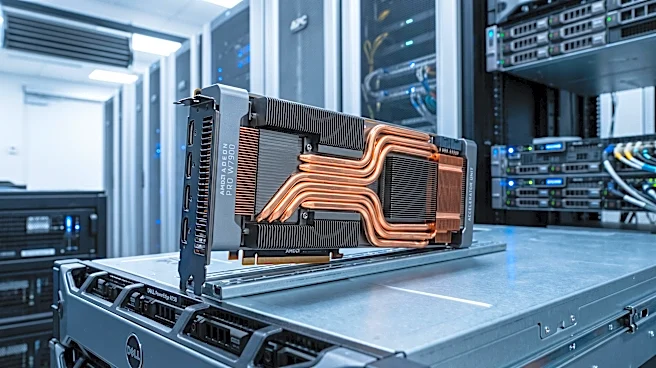
The AI revolution is built on a different kind of math—complex operations repeated billions or trillions of times to train models and serve predictions. While a CPU can do this work, it's not its specialty. Enter the AI accelerator, a category of hardware that includes Graphics Processing Units (GPUs) and custom-designed chips known as ASICs. If a CPU is a general manager, an AI accelerator is a team of hyper-specialized geniuses who do one thing with breathtaking speed and efficiency. They are designed specifically for the parallel processing that AI workloads, like Meta's recommendation algorithms, thrive on. This specialization means better performance, lower latency, and greater power efficiency for each task.
Why Meta Is Overhauling Everything
The shift from a social network that uses AI to an AI-first company is driving this change. Meta’s AI needs have grown dramatically, powering everything from content ranking on Facebook and Instagram to the development of generative AI assistants. The old CPU-centric data centers simply couldn't keep up with the power and networking density required by massive clusters of GPUs. This led Meta to scrap previous data center designs and start over, creating new facilities optimized for AI. These next-generation data centers feature advanced liquid cooling systems to handle the heat from power-hungry accelerators and high-performance networks to connect thousands of chips together for massive training jobs.
Building Its Own Tools for the Job
To gain a competitive edge and control its own destiny, Meta isn't just buying accelerators; it's building them. The company is investing heavily in its own family of custom chips, the Meta Training and Inference Accelerator (MTIA). These chips are tailor-made for Meta's specific workloads, particularly the recommendation models that are core to its business. By designing its own silicon, Meta can optimize for cost and efficiency, reduce its reliance on thirdparty suppliers, and rapidly iterate on new chip designs to keep pace with evolving AI models. The company has an aggressive roadmap, planning to roll out four new generations of MTIA chips in just two years.
A Hybrid Strategy for a Competitive Future
Meta isn't putting all its eggs in one basket. The company is pursuing a 'portfolio' approach, combining its custom MTIA chips with highend GPUs and CPUs from partners like NVIDIA, AMD, and Qualcomm. This strategy provides flexibility and hedges against supply chain disruptions. The scale of this buildout is staggering, with billions invested in new AIready data center campuses. By treating its physical infrastructure as a core product, Meta aims to create a fully integrated system where its apps, AI models, and hardware are codesigned for maximum performance.