






The High-Bandwidth Memory (HBM) Bottleneck
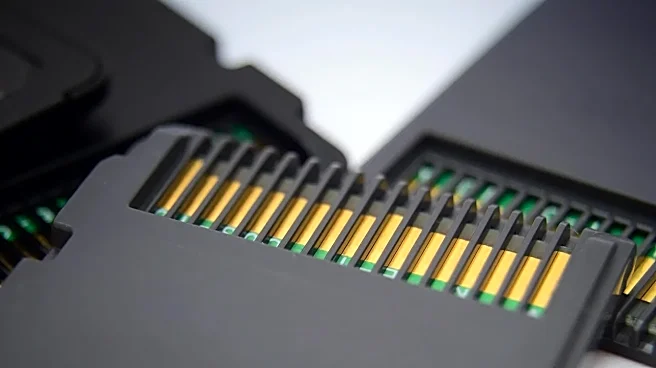
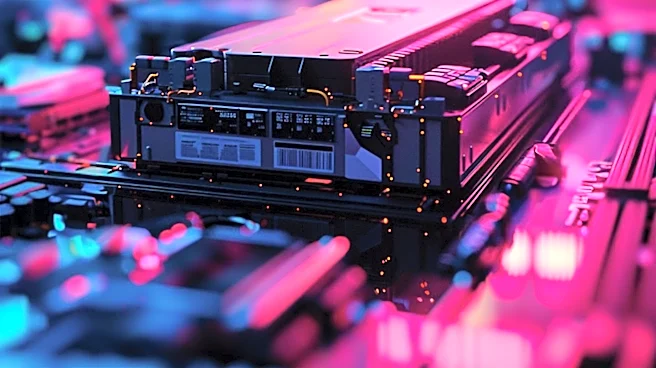
First, listen for any mention of High-Bandwidth Memory, or HBM. Think of HBM as the ultra-premium, high-octane fuel for Nvidia's AI chips. It’s a type of memory that is stacked vertically, like a tiny skyscraper, and placed right next to the main processor.
This proximity allows for lightning-fast data transfer, which is absolutely essential for training and running massive AI models like ChatGPT. The problem is, making HBM is incredibly complex, and the supply is notoriously tight. Memory makers are investing billions, but they can't build new factories overnight. Nvidia’s ability to get its hands on enough HBM directly dictates how many of its top-tier GPUs it can actually ship. Commentary on HBM supply and pricing is a direct indicator of whether the company can meet the blistering demand for its products or if growth will be capped by this critical component shortage. In recent quarters, executives have called memory costs "extreme," even for a giant like Nvidia, suggesting the bottleneck is a major factor limiting growth.
The Advanced Packaging Puzzle
The second key area is "advanced packaging." This isn’t about the cardboard box the chip arrives in. It’s the microscopic, high-tech process of assembling the processor and those HBM stacks into a single, cohesive unit. Technologies with names like CoWoS (Chip-on-Wafer-on-Substrate) are the secret sauce that enables Nvidia to cram so much power into a small space. This process is essentially about creating a mini-supercomputer on a tiny silicon platform, reducing the distance data has to travel and boosting speed and efficiency. Just like HBM, the capacity for advanced packaging is limited, with primary supplier TSMC often fully booked. If Nvidia can’t get enough packaging capacity, it doesn’t matter how many chips it designs or how much HBM it buys—it can't build the final product. Any hint of easing or worsening constraints in the packaging supply chain will tell us how quickly Nvidia can ramp up production of its most profitable and powerful chips, such as those based on its Blackwell and upcoming Rubin architectures.
The Data-Center Demand Signal
Finally, zoom out to the big picture: data-center capacity. Nvidia’s success is a direct reflection of the global build-out of AI infrastructure. Its biggest customers—cloud providers like Amazon, Microsoft, and Google—are in a relentless race to expand their data centers to power the AI revolution. Nvidia's earnings commentary provides one of the clearest views into the scale and pace of this expansion. Listen for how the company describes demand from these hyperscalers, as well as the growing cohort of "sovereign AI" customers, which are nations building their own AI infrastructure. Recent reports indicate that demand is broadening and accelerating, with some cloud providers planning to deploy millions more Nvidia GPUs. This isn't just about selling more chips; it’s a bellwether for the entire tech economy. Strong, sustained demand signals that the AI boom has durable legs, justifying massive capital expenditures. Conversely, any hint of a slowdown could signal that the industry is tapping the brakes on spending, with ripple effects far beyond Nvidia.