







The Unsolvable Blockchain Puzzle
To understand what makes Algorand different, you first have to know about the “blockchain trilemma.” Coined by Ethereum’s founder, the concept states that a blockchain can only have two of three essential properties: security, scalability (speed), or decentralization.
A secure and decentralized network like Bitcoin, for instance, sacrifices scalability, leading to slow transaction times. A network that’s fast and scalable might achieve that by relying on a small number of validators, sacrificing decentralization. For years, this trilemma has been the central puzzle for developers trying to build a blockchain for mainstream, global use. Any project that could solve it would have a massive advantage.
A Founder's Radical Idea
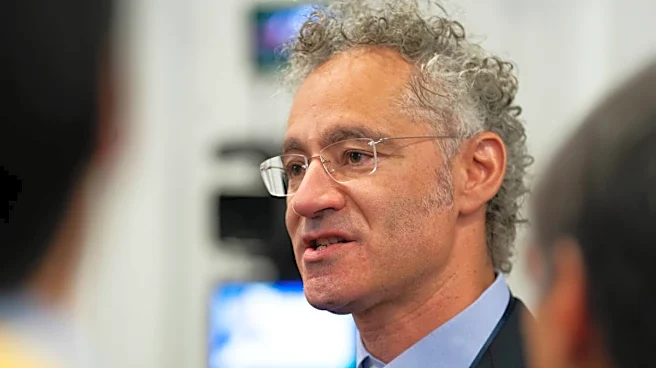
Enter Silvio Micali. Before founding Algorand in 2017, Micali was already a giant in computer science. An MIT professor and recipient of the Turing Award—often called the Nobel Prize of computing—he helped invent core cryptographic concepts like zero-knowledge proofs. Instead of just tweaking existing blockchain models, Micali went back to the drawing board to challenge the trilemma itself. He saw that the consensus mechanism, the very method by which a network agrees on which transactions are valid, was the key. He believed a fundamentally different approach was needed, one that didn't force a trade-off between the three crucial properties.
The Secret Sauce: Pure Proof-of-Stake
This brings us to the hidden detail: Algorand’s Pure Proof-of-Stake (PPoS) consensus mechanism. Unlike other systems where a few powerful players (miners or large 'stakers') have outsized influence, PPoS is designed to be deeply democratic. Here’s the simple version: for every new block of transactions, the system runs a secret, random lottery. Any user holding even a small amount of ALGO, the native token, has a chance to be selected to propose the block and to be on the committee that votes on it. This selection is done through a Verifiable Random Function (VRF), a cryptographic tool Micali co-invented, ensuring the process is unpredictable and tamper-proof. Critically, the participants are chosen secretly and randomly, and they only reveal themselves after their work is done. This means an attacker has no idea who to target, securing the network without centralizing power.
So What? Speed, Security, and No Forks
This lottery-based system is what allows Algorand to claim it solves the trilemma. Because the committees are small and randomly selected for each block, consensus is reached in seconds, not minutes. This gives the network high scalability, with the ability to process thousands of transactions per second for a fraction of a cent. The randomness and the fact that millions of users are eligible to participate ensures decentralization. Security comes from the fact that it's impossible to corrupt the randomly chosen participants before they vote. A major side effect is that Algorand is “fork-proof.” Once a block is approved, it’s final. There's no uncertainty or waiting for multiple confirmations, which is a critical feature for financial applications where finality is non-negotiable.
From Theory to Real-World Use
This isn't just theoretical. Algorand's focus on a stable, high-performance foundation is attracting real-world use cases beyond speculative trading. The network is seeing growing adoption in areas like machine-to-machine micropayments for AI agents, which leverage its low fees and fast settlement. Furthermore, recent regulatory moves by the SEC have opened the door for tokenized U.S. stocks, a development that plays directly to Algorand's strengths in providing a compliant and efficient infrastructure for traditional finance. The platform is also aggressively pursuing post-quantum security, aiming to make its network resistant to threats from future quantum computers, a move that further signals its focus on long-term institutional and enterprise adoption.