





Before the Standard: A Digital Tower of Babel
In the late 1970s, electronic mail was a chaotic landscape. Different computer networks, like the ARPANET, had their own messaging systems, but they didn't speak the same language. Sending a message from one network to another was often impossible. Each
system had its own proprietary format, its own way of listing a recipient, and its own rules. As independent networks began to pop up, they made incompatible changes to their mail programs. In an interview, the standard's author, David Crocker, noted that by 1977, there was a "commonality of philosophy but no commonality of detail." It was the digital equivalent of a dozen different postal services, each with unique address formats and envelope sizes, trying to deliver mail to each other. This lack of a common ground was a huge barrier to creating a truly global, interconnected communication network.
Enter RFC 822: The Humble Blueprint for Modernity
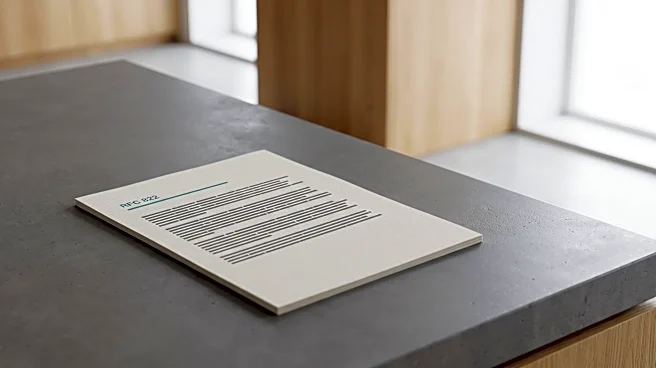
Published on August 13, 1982, Request for Comments #822, titled "Standard for the Format of ARPA Internet Text Messages," was the answer to this chaos. Authored principally by David H. Crocker of the University of Delaware, the document wasn't flashy. It simply and methodically laid out a set of rules for what an email message should look like. It established the now-familiar two-part structure: a header section and a body section, separated by a blank line. Most importantly, it defined the syntax for the headers that we still use today: "From:", "To:", "Cc:", "Subject:", and "Date:". It also codified the use of the "@" symbol to separate a user's name from their host domain, a convention that has lasted for over four decades. It was a simple set of agreements, a common language that any email program could learn to speak.
The Real Revolution Was Interoperability
The technical details, however, aren't the real story. The true genius of RFC 822 was its underlying philosophy. By creating a public, open standard, it ensured that no single company or entity could own email. Anyone could build an email client or run a mail server, as long as it followed the rules of RFC 822. This prevented the kind of walled-garden ecosystems that dominate so many other areas of tech. It created a level playing field, fostering competition and innovation. This decision was a radical act of decentralization disguised as a boring technical memo. The goal was explicitly to create a standard free of dependence on any single environment so it could be applied to other network systems beyond the ARPANET. It was this principle of interoperability that allowed email to become a universal, global utility rather than a collection of fragmented, proprietary services.
The Unseen Legacy in Your Inbox Today
While RFC 822 itself has been updated and superseded by newer standards like RFC 2822 (in 2001) and RFC 5322 (in 2008), its core DNA is alive and well in every single email you send or receive. The fundamental structure of headers and body, and the familiar fields like "Subject:" and "To:", are direct descendants of that 1982 document. Even the standard for attachments (MIME) was built on top of the framework that RFC 822 established. The document had its quirks; some of its loose rules caused headaches for programmers for years, but its foundational concepts were so sound that they've endured for decades of technological evolution. Every time you dash off a quick email, you are using a system whose core logic was hammered out in a collaborative, open process more than 40 years ago.