





Huang’s Long Game: The GPU as AI’s Engine
For decades, the Graphics Processing Unit (GPU) was a niche component beloved by PC gamers for rendering realistic visuals. But Nvidia CEO Jensen Huang saw a different future. He wagered that the GPU's architecture—designed to handle thousands of parallel
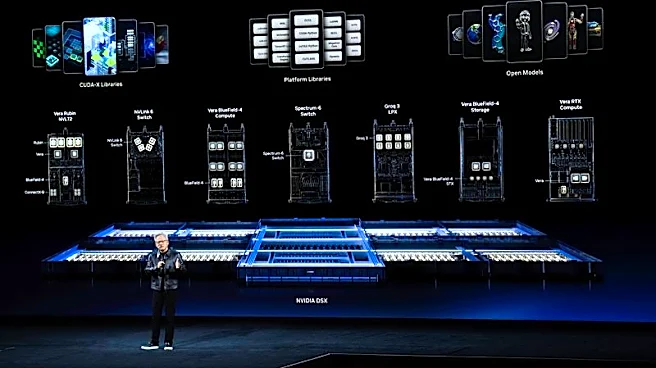
calculations simultaneously—was perfectly suited for the massive, repetitive math problems at the heart of artificial intelligence. Huang’s strategy was to transform the GPU from a graphics engine into a general-purpose computing powerhouse. This required not just building faster chips, but creating a whole software ecosystem around them. The result was CUDA, a software layer that lets developers access the immense parallel processing power of Nvidia’s GPUs for all sorts of tasks, not just gaming. This decision effectively turned Nvidia into the primary arms dealer for the coming AI revolution.
Microsoft’s Cloud Kingdom: The Race for a World Computer
While Nvidia was perfecting its hardware, Microsoft was busy building a global empire in the cloud. Under CEO Satya Nadella, the company’s Azure platform became a juggernaut, competing fiercely with Amazon Web Services for control of the world’s digital infrastructure. As the AI wave began to crest, Nadella recognized a monumental opportunity: to make Azure the go-to platform for training and deploying the world's most powerful AI models. This wasn't just about offering server space; it was about building a purpose-built AI supercomputer accessible to any developer or company on the planet. But to power this global AI factory, Microsoft needed an unprecedented amount of specialized processing power. It needed chips by the tens of thousands.
The Billion-Dollar Handshake
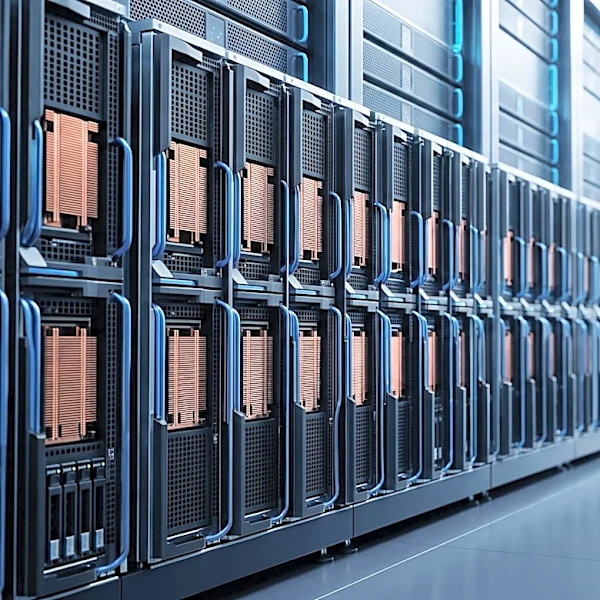
This is where the two strategies converged in spectacular fashion. Microsoft’s ambition required the exact hardware that Jensen Huang had spent years building. Azure became one of the biggest and most important customers for Nvidia’s data center GPUs, from the A100 and H100 to the latest, most powerful Blackwell and Vera Rubin architectures. Microsoft was one of the first cloud providers to announce it would offer instances powered by Nvidia’s GB200 'superchips', integrating them into its data centers with advanced liquid cooling and networking to squeeze out every drop of performance. This wasn't a tentative experiment; it was a deep, multi-billion dollar commitment to build the future of Azure AI on Nvidia's silicon.
A Symbiotic Partnership, Not Just a Sale
Calling Microsoft a mere 'customer' of Nvidia misunderstands the relationship. It's more of a co-dependent, symbiotic loop. Microsoft provides Nvidia with a massive, guaranteed market for its most advanced—and most expensive—chips. It also provides a global stage to deploy Nvidia’s full software stack, from CUDA to enterprise tools like AI Foundry, making them the default for developers on Azure. In return, Microsoft gets priority access to the most powerful AI hardware on the planet, giving it a crucial competitive edge over rivals. The two companies now co-engineer solutions, with Nadella and Huang frequently sharing stages to announce how they are optimizing everything from the silicon to the cloud service to deliver more 'tokens per dollar per watt'. While Microsoft is also developing its own in-house AI chips, like Maia, to diversify its supply and manage costs, Nadella has been clear that its partnership with Nvidia remains central to its strategy. For the foreseeable future, the two are locked in a wildly profitable embrace, shaping the infrastructure that will power the next decade of technology.