





A World of Disconnected Networks
Imagine a world with different postal services for every state, none of which would deliver mail to an address outside their borders. That’s what the digital world looked like in the early 1970s. There wasn’t one internet, but many small, isolated networks.
The most famous was ARPANET, a U.S. Department of Defense project, but there were others, like satellite and radio networks. Each had its own rules and hardware, making them unable to communicate with one another. The challenge wasn't just connecting computers; it was connecting entire networks. Robert Kahn, then at DARPA, envisioned a solution: an open-architecture network where any network could talk to any other, regardless of its underlying hardware. This was a radical idea that required a universal language for data.
The Digital Handshake Called TCP/IP
In 1973, Kahn teamed up with Vinton Cerf to design this universal language. The result was the Transmission Control Protocol/Internet Protocol, or TCP/IP. You can think of it as a two-part system for a global postal service. First, TCP (Transmission Control Protocol) takes your data—whether it's an email or a piece of a movie—and breaks it down into small, numbered packets. It’s like disassembling a piece of furniture and putting each part in a numbered box. Then, IP (Internet Protocol) acts as the address label for each packet, figuring out the best route for it to travel across the vast web of networks to its destination. When the packets arrive, TCP checks to make sure all the numbered boxes are there, requests re-sends of any that got lost along the way, and reassembles them in the correct order. This simple but brilliant system solved the problem of reliably sending information between completely different types of networks.
The Genius of Permissionless Innovation
The true, lasting genius of Cerf and Kahn’s design wasn’t just its technical function, but its philosophy. TCP/IP is deliberately simple and open. It doesn't care what the data packets contain—email, video, voice, or something no one had imagined yet. And it operates on a principle of decentralization, with no central authority controlling the whole system. This created a stable, reliable foundation upon which anyone could build new applications without asking for permission. This concept, often called “permissionless innovation,” is the reason the internet exploded with creativity. The inventors of the World Wide Web, streaming video, and social media didn't need to reinvent the rules of data transmission; they could just build their ideas on top of the robust framework Cerf and Kahn had already established.
From ARPANET to the Everything Cloud
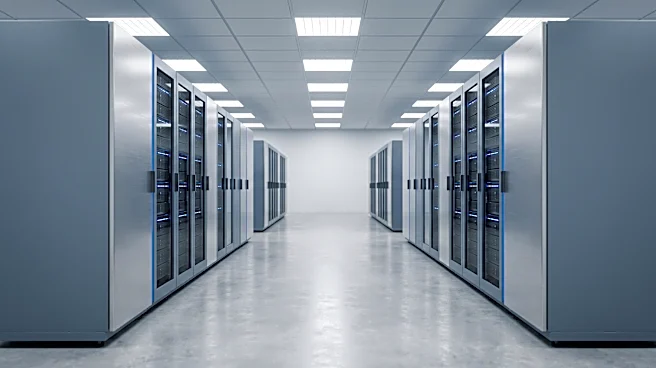
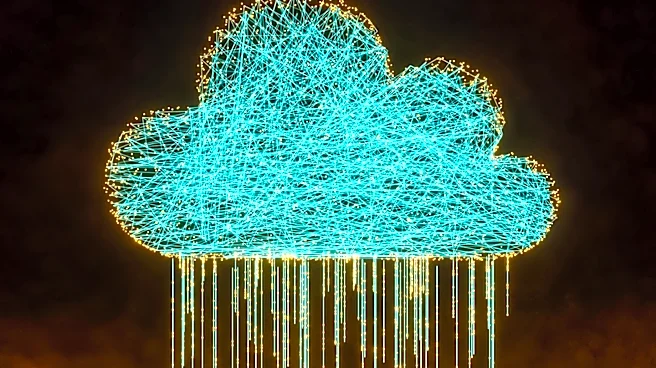
Today, the principles of TCP/IP are so deeply embedded in our digital infrastructure that they’re practically invisible. Modern engineering is fundamentally shaped by them. Cloud computing platforms like AWS and Azure use TCP/IP to manage and route data between millions of servers, enabling the scalability modern applications require. The Internet of Things (IoT), with its billions of connected devices, relies on IP addressing to give every sensor a unique identity. When you work from home, your video calls and remote desktop sessions are managed by protocols layered on top of TCP/IP. Engineers still make trade-offs between TCP's reliability for critical data like financial transactions and the speed of its sibling protocol, UDP, for live video or gaming where a lost packet is less critical than low latency. This fundamental flexibility is a direct legacy of Cerf and Kahn's original design.