







The Kings of 'You've Got Mail'
To understand the sheer magnitude of AOL’s big gamble, you have to travel back to the late 1990s. For millions of Americans, AOL was the internet. Through a relentless marketing campaign that involved mailing millions of free-trial CDs, the company made
the online world accessible to the masses. By the year 2000, it had amassed over 20 million paying subscribers who dialed up for email, chat rooms, and news. AOL wasn't just a company; it was a cultural phenomenon, immortalized in the film "You've Got Mail." At its peak, its market valuation was a staggering $200 billion, built on dial-up subscriptions and the promise of a digital advertising future. But behind the scenes, its leaders, particularly CEO Steve Case, were deeply concerned about the future. They knew dial-up wouldn't last forever, and they were surrounded by competitors. They needed a way to secure their future as the internet was shifting toward high-speed broadband.
The Bet: Merging with an Empire
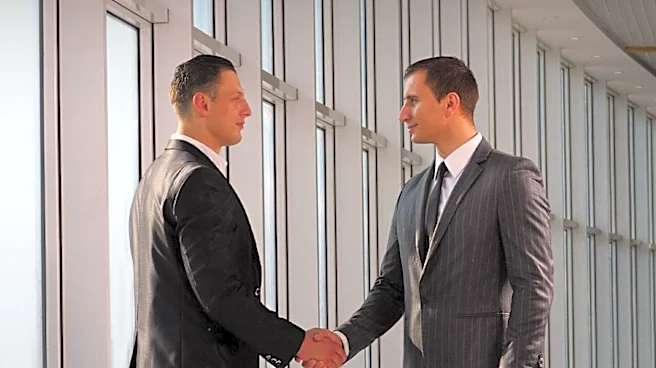
The solution, announced in January 2000, was audacious: AOL would merge with Time Warner, a titan of traditional media. This wasn't just a partnership; it was a $164 billion acquisition that created a new company, AOL Time Warner, valued at an eye-watering $350 billion. At the time, it was the largest corporate merger in U.S. history. The logic, on paper, seemed powerful. Time Warner owned the content—CNN, HBO, Warner Bros., Time Magazine—and AOL owned the audience and distribution. The vision was a vertically integrated media powerhouse that would deliver Time Warner’s premium content through AOL's digital platform, creating unparalleled synergy. It was a bet on "convergence," the idea that old and new media were destined to become one. For AOL, it promised access to Time Warner's content and, crucially, its cable infrastructure to transition from dial-up to broadband. For Time Warner, it was a shortcut into the heart of the internet revolution without having to build from scratch.
A Deal Nobody Else Would Make
So why was this a bet nobody else would make? First, the timing was catastrophically bad. The deal was announced at the absolute peak of the dot-com bubble. AOL's valuation was based not on concrete profits, but on the inflated hype surrounding internet advertising. Just two months after the announcement, the bubble began to burst, and the tech-heavy NASDAQ stock market started to crash. The ad revenue that fueled AOL’s valuation evaporated almost overnight as dot-com startups went bankrupt. Second, the deal was built on a fundamental misunderstanding of corporate culture. AOL was a fast-paced, aggressive tech upstart with a "jeans and t-shirts" vibe. Time Warner was a traditional, bureaucratic media empire run by executives in suits who were deeply protective of their brands. This wasn't a merger of equals; it was a culture war waiting to happen. The two sides reportedly saw each other as "dinosaurs" and "arrogant upstarts," respectively.
The Spectacular Collapse
The promised synergies never materialized. The deep cultural clashes and turf wars prevented any meaningful cooperation. Time Warner executives were hesitant to "cheapen" their prestigious content by plastering it all over what they saw as a tacky internet portal. Meanwhile, AOL’s core business was eroding faster than anyone anticipated. As users migrated to faster broadband connections, AOL's dial-up subscription model became obsolete, and it failed to transition its customers effectively. The financial fallout was breathtaking. In 2002, AOL Time Warner reported a net loss of $99 billion, the largest annual corporate loss ever recorded at the time, largely due to writing down the failed value of the merger. The stock price plummeted by over 90%, wiping out more than $200 billion in shareholder value. The merger, intended to define the 21st century, had become one of the biggest business disasters in history.