



The Core Idea: More Brains Are Better Than One
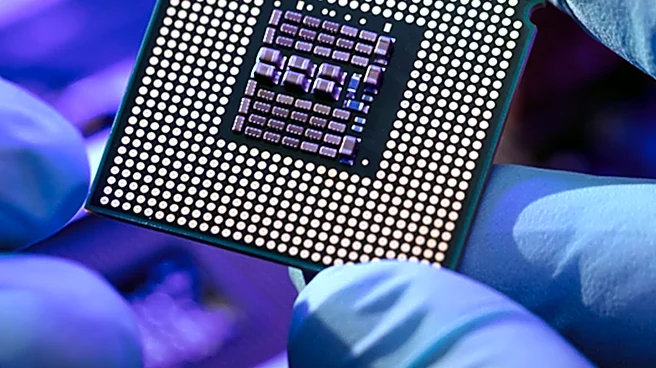
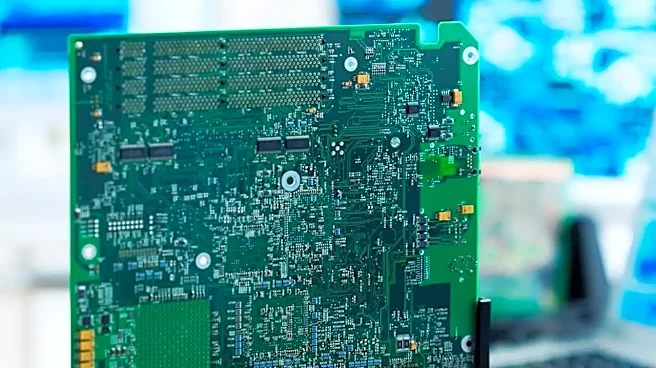
In the early days of computing, one processor (CPU) did all the work. But as our demands grew, a single brain wasn't enough. The solution was multiprocessing: using multiple CPUs or processing cores to tackle tasks in parallel. This is why even your smartphone
has a multi-core processor today. But getting those cores to work together efficiently created a fundamental design choice. How should they all access the computer's main memory, where data and instructions are stored? The two dominant answers to that question are SMP and NUMA.
The Team Player: What is SMP?
Symmetric Multiprocessing (SMP) is the most straightforward approach. Imagine a small team of chefs all working in one kitchen. They share a single, large pantry (the main memory) and have equal access to everything in it. Any chef can grab any ingredient at any time. In an SMP system, all processors are identical peers connected to a single pool of memory. Any processor can run any task, and the operating system can freely move jobs between them to balance the load. This design is simple, and for many years it has been the standard for everything from laptops to servers. Its biggest strength is its simplicity—programmers don't have to worry about where data is stored, because all memory access is uniform.
The Specialist Crew: Enter NUMA
The SMP model has a scaling problem. As you add more and more chefs to the kitchen, they start bumping into each other trying to get into the same pantry. The shared bus to memory becomes a bottleneck. This is where Non-Uniform Memory Access (NUMA) comes in. Instead of one giant kitchen, imagine several smaller, specialized kitchen stations. Each station has a dedicated chef (or a small group of them) and its own small, local pantry. A chef can grab ingredients from their own pantry almost instantly. They can still walk over to another station's pantry to get an ingredient, but it takes longer. In a NUMA system, memory is attached to specific processors or groups of processors. Accessing that "local" memory is fast, while accessing "remote" memory attached to another processor is slower—hence the name "non-uniform."
The Showdown: Simplicity vs. Scalability
The choice between SMP and NUMA is a classic engineering trade-off. SMP offers simplicity and uniform performance, making it great for most consumer devices like desktops and laptops, where the number of cores is relatively small. Software doesn't need special treatment to run well. However, its performance hits a wall as you add more processors. NUMA was specifically designed to overcome SMP's scalability limits. By giving processors their own local memory, it dramatically reduces the traffic jam on the memory bus, allowing for systems with dozens or even hundreds of cores. This makes it the dominant architecture in high-performance computing, large-scale databases, and the massive servers that power cloud services and virtualization. The trade-off is complexity; for the best performance, the operating system and software must be "NUMA-aware," meaning they need to try to keep a process and its data on the same node to avoid slower, remote memory access.
Why It Matters From Your Laptop to the Cloud
While you may never see "SMP" or "NUMA" in a software feature list, this underlying hardware design quietly affects your daily digital life. The snappy multitasking on your personal computer is a direct benefit of the simple and effective SMP architecture used in modern consumer CPUs. When you use a cloud service, search a massive database, or watch a streaming movie, you're relying on the immense power of NUMA-based servers. These systems, with their vast number of cores, can handle thousands of simultaneous requests precisely because the NUMA design allows them to scale far beyond the limits of a simple shared-memory model. Even high-end gaming and creative workstations with multiple processors, like AMD's Threadripper, leverage NUMA to deliver extreme performance. Understanding the difference helps explain why a server and a desktop PC, even with the same number of cores, are built for fundamentally different worlds.