




A Market Waiting for an Idea
Before 2012, the smartwatch was a niche, almost comical, idea. Big tech companies had tried and failed to create a compelling wrist-based computer, resulting in clunky, feature-overloaded gadgets that nobody actually wanted. They were solutions in search
of a problem, born in corporate boardrooms and completely disconnected from what a user might find useful. The market wasn't just small; it was practically nonexistent, littered with the ghosts of failed experiments from giants who couldn't crack the code.
A Watch Built by the People
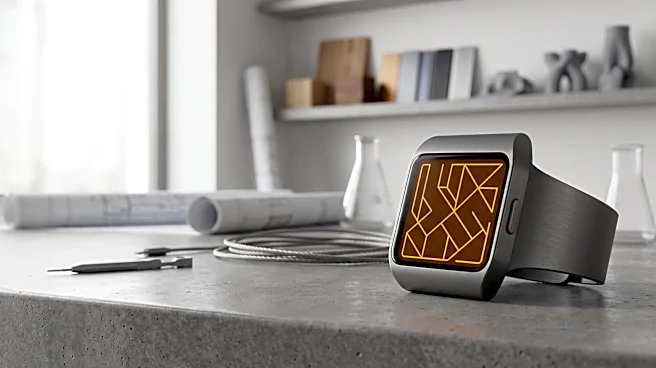
Into this void stepped Eric Migicovsky and a small team with a radically different approach. Their device, the Pebble, was conceived not to replace your phone, but to be a simple, useful companion to it. Unable to secure traditional funding, they took their idea to Kickstarter in April 2012 with a modest goal of $100,000. They raised that in about two hours. By the time the campaign closed, they had over $10 million from nearly 69,000 backers. The reason for the explosive success was the product’s philosophy: a low-power, always-on e-paper screen, a week-long battery life, and physical buttons for reliable control. It focused on doing a few things well: showing notifications, controlling music, and telling time with customizable faces. It was a gadget built not on corporate ambition, but on community enthusiasm.
The Smartwatch Blueprint
Pebble didn't just sell a lot of watches; it wrote the blueprint for what a modern smartwatch should be. It established the core use case that defines the category to this day: a device that delivers timely notifications and light interactions, saving you from constantly pulling out your phone. It pioneered the idea of an open platform with a freely available SDK, sparking a vibrant community of developers who created thousands of apps and watch faces. This proved that a smartwatch's value was not just in its hardware, but in its ecosystem—a lesson Apple and Google would later adopt with massive success. For a few years, Pebble showed the world what a smartwatch was for. It proved a multi-billion dollar market existed where giants had previously stumbled.
When Giants Enter the Ring
Pebble's success was ultimately a double-edged sword. By proving the market's viability, it effectively sent an engraved invitation to the world's largest technology company. When the Apple Watch arrived in 2015, the game changed overnight. While Pebble had a devoted following, it couldn't compete with Apple's manufacturing scale, marketing budget, and ecosystem lock-in. Hardware is notoriously difficult, and scaling production while remaining profitable proved to be an insurmountable challenge for the independent company. In December 2016, after a few more successful Kickstarter campaigns, the company ran out of money and sold its intellectual property and key assets to Fitbit for just $23 million, a fraction of what it had once been offered.
Echoes in Today's Tech
The headline of Pebble’s closure suggests failure, but its legacy is one of profound, quiet influence. For one, Pebble de-risked the entire wearables category for Apple. It served as a massive, multi-year market research project, showing exactly what users wanted. Secondly, Pebble and the Kickstarter era it championed created a new, viable path for hardware startups. It proved that you could bypass skeptical venture capitalists and validate a product idea by going directly to consumers. This model, with all its perils and potential, has been copied by countless hardware creators since. The open, hacker-friendly spirit of Pebble also lives on. After its assets were sold, a community-led project called "Rebble" kept the ecosystem alive for years, and the eventual open-sourcing of Pebble's software has led to a revival of the brand.