
The Myth: AI Agents Kill the Ad Star
The fantasy goes something like this: in the near future, you won't scroll through Instagram or Facebook. Instead, you'll talk to a powerful Meta AI agent that acts as your digital butler. It will book your travel,
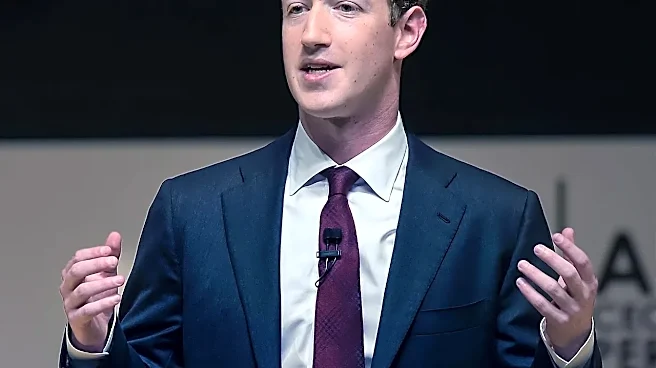
order your groceries, and recommend products, rendering traditional ads obsolete. In this world, Meta sheds its reliance on advertising and transitions to a new model, perhaps charging for premium AI agents or taking a cut of transactions. CEO Mark Zuckerberg has fueled this vision, speaking of a future where businesses can simply state their goals and let AI handle the entire process. This narrative is compelling because it offers a clean, futuristic break from the ad-supported internet we know today.
The Reality: A Finely-Tuned Money Machine
This myth conveniently ignores the colossal reality of Meta's current business. The company's advertising operation isn't a clunky legacy system waiting to be replaced; it's a hyper-efficient, AI-powered engine that generates over 97% of its revenue, recently topping $135 billion annually. Every time a user scrolls, Meta runs a complex, invisible auction in milliseconds to decide which ad to show. The system is designed to maximize value for advertisers by finding the exact users most likely to convert, a process that has become even more precise with recent AI advancements. This machine is incredibly profitable and deeply integrated into the strategies of millions of businesses, from global brands to small ecommerce shops. Replacing it isn't like swapping out an old part; it’s like trying to change the engine of a Formula 1 car while it’s still racing.
AI Is an Evolution, Not a Revolution
The biggest misunderstanding is the idea that AI is a new force poised to attack the ad model from the outside. In reality, AI is already deeply woven into the fabric of Meta's advertising business and is making it stronger, not weaker. Tools under the "Advantage+" suite use AI to automate and optimize almost every aspect of a campaign, from budget allocation and audience targeting to generating the ad creative itself. Advertisers using these tools have seen significant improvements in their return on ad spend. From Meta’s perspective, AI isn’t a replacement for the ad business; it's the key to its next phase of growth. By making advertising easier and more effective, especially for smaller businesses, AI is expanding the existing market, not killing it.
The Practical Hurdles to an AI-Only Future
Even if Meta wanted to flip a switch, the practical challenges are monumental. First, there's the staggering cost. Meta is already planning to spend between $125 billion and $145 billion on infrastructure in 2026 alone, largely to support its AI ambitions. Building a new transactional or subscription-based ecosystem for billions of users would require even more massive investment with no guaranteed return. Second is the user problem. Billions of people use Meta's apps for free. Convincing a meaningful fraction of them to pay for AI features that replace a free service is a monumental task. Finally, there's the advertiser side. Businesses have spent decades and trillions of dollars mastering the current ad auction system. They are unlikely to abandon a proven, scalable model for a theoretical one, especially when the current system is continuously improving thanks to AI.