









The Usual Suspects: What Buyer’s Guides Tell You
Flip through any online buying guide, and you’ll see the same specs repeated: the number of outlets, USB ports, and, most importantly, the joule rating. A joule is a unit of energy, and the rating tells you how much energy a surge protector can absorb
before it fails. The common wisdom is simple: a higher joule rating means better protection, so you look for a big number—at least 1,000 for sensitive electronics—and assume you’re covered. Reviewers compare these numbers, check for UL certification (a critical safety standard), and declare a winner. While these details matter, they create a false sense of permanent security by skipping over the fundamental nature of how these devices actually work.
The Real Secret: Surge Protectors Wear Out
Here is the critical detail nearly everyone misses: a surge protector is a consumable item. It is not a one-time purchase like a lamp; it’s more like the tires on your car. Inside every surge protector are components called Metal Oxide Varistors (MOVs) that absorb and divert the excess voltage from power surges. But each time they do their job, whether it’s against a tiny, unnoticeable power fluctuation from an air conditioner kicking on or a major spike from a nearby lightning strike, they degrade a little. Every surge uses up a piece of the device's protective capacity. Eventually, after absorbing enough energy, the MOVs wear out completely, and the surge protector stops protecting.
Why Joules Aren't the Whole Story
This is why the joule rating is so misunderstood. It's not a measure of strength, like horsepower in a car; it's a measure of lifespan, like a finite health bar in a video game. A surge protector with a 2,000-joule rating can absorb one massive 2,000-joule hit, or ten 200-joule hits, or hundreds of smaller ones. The problem is, there's no gauge to tell you how many joules are left. Your protector could have been silently weathering small, daily surges for years, leaving it with little to no defensive capacity. When a significant power event finally happens, the depleted device offers no resistance, sending the full force of the surge directly to your electronics.
The Clues Your Protector Is Past Its Prime
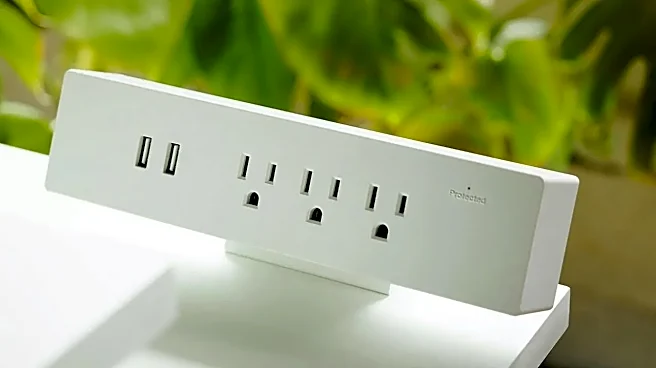
So how can you tell when it’s time for a replacement? Some surge protectors offer clues. Most have a “protected” or “surge” indicator light. If that light is off, it’s a clear warning that the protective components have been compromised and the device must be replaced immediately. However, even if the light is still on, the protection could be significantly degraded. The light only confirms the circuit is ready; it doesn't measure how much protection is left. For this reason, electricians and safety experts recommend a simple, time-based approach. As a rule of thumb, you should replace your surge protectors every three to five years, regardless of their apparent condition. If your area experiences frequent thunderstorms or power grid issues, consider replacing them every two years.
Your New Shopping and Usage Strategy
Armed with this knowledge, you can approach surge protection like a pro. First, never use a power strip that doesn’t have a joule rating and a UL 1449 certification; those are just extension cords in a different shape. When you buy a new surge protector, take a marker and write the date of purchase directly on the back. Set a calendar reminder for three years from that date to replace it. Think of it as a $30 insurance policy that you renew every few years to protect thousands of dollars in electronics. After any major electrical event, like a nearby lightning strike or a prolonged power outage, it's wise to replace your surge protectors immediately, as a single large event can completely exhaust their capacity.