





The AI Data Center Gold Rush
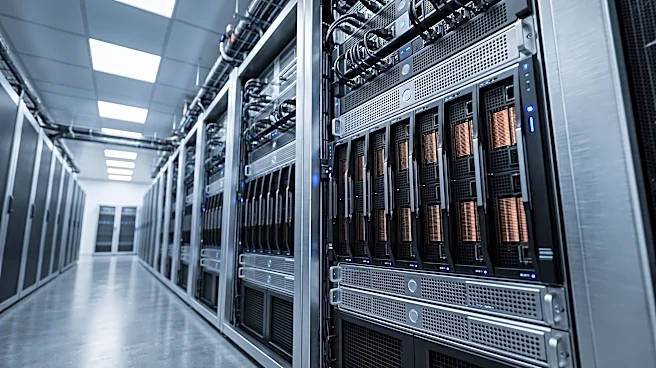
The single biggest reason Nvidia's earnings have skyrocketed has little to do with consumer gaming. The company's true center of gravity has shifted to the data center. Recent financial results show the Data Center segment accounting for the overwhelming
majority of revenue, sometimes nearing 90%. This division doesn't just sell chips; it provides the foundational hardware for the artificial intelligence revolution. Every time a company trains a large language model like those behind popular chatbots, or a cloud provider offers AI services, they are almost certainly using thousands of Nvidia's specialized data center GPUs. This has transformed Nvidia from a component supplier into the primary builder of 'AI factories', the indispensable infrastructure for modern computing. As a result, its financial performance is now tied directly to the massive, ongoing investment in AI by the world's largest technology companies.
It’s Not the Volume, It’s the Price Tag
Focusing on shipment 'volumes' alone is misleading because not all chips are created equal. A high-end GeForce GPU for a gaming PC might cost a consumer over a thousand dollars. A data center accelerator, like those in the Hopper or Blackwell series, can sell for tens of thousands of dollars per unit. The profit margins on these enterprise-grade products are immense, with recent gross margins for the company hovering around an astonishing 75%. This means for every dollar of revenue, Nvidia keeps about 75 cents before operating expenses. That level of profitability is more akin to a high-end software company than a traditional hardware manufacturer. The company's success, therefore, hinges not just on selling more units, but on selling a richer 'product mix'—prioritizing these high-value, high-margin data center solutions that its customers desperately need and for which there are few viable alternatives.
The Unseen Moat: A Software Ecosystem
Perhaps the most misunderstood part of Nvidia's dominance is its software. CUDA, a parallel computing platform and programming model created by Nvidia, is the secret sauce that makes its hardware so valuable. For over a decade, AI and high-performance computing developers have been writing code specifically for CUDA. This creates an incredibly 'sticky' ecosystem. Even if a competitor produces a comparable or cheaper chip, a company would have to spend enormous time and money rewriting years of software to switch. This software 'moat' effectively locks in customers and ensures that demand for Nvidia's GPUs remains high. The company gives CUDA away for free, knowing that its true value comes from how it drives sales of its premium hardware, turning a hardware business into a full-stack platform.
New Frontiers and Future Bets
While the data center is the engine of today's earnings, Nvidia is actively cultivating future revenue streams. The Automotive segment is a significant long-term bet, providing the 'brains' for autonomous vehicles and in-car infotainment systems. Revenue from this sector has been growing steadily as more car manufacturers adopt Nvidia's DRIVE platform. Additionally, the Professional Visualization division, which powers everything from Hollywood special effects to architectural design with tools like its Omniverse platform, is another key market. More recently, Nvidia has even begun experimenting with business models that go beyond one-time hardware sales, engaging in revenue-sharing agreements with emerging AI cloud providers. These ventures show that Nvidia's strategy is to embed its technology in every high-growth sector, ensuring its earnings are not dependent on any single market.