








The Seductive—and Misleading—Spec Sheet
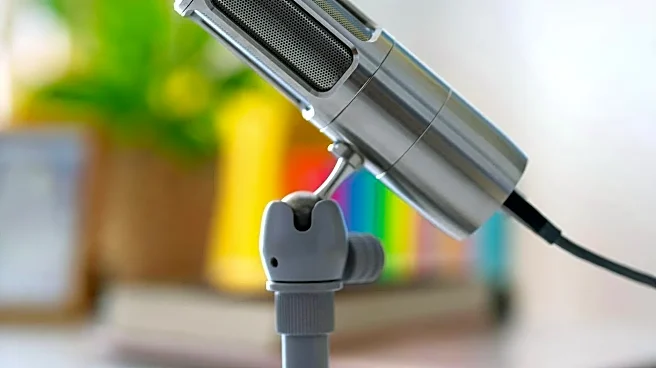
When you're shopping for a microphone, the box or product page presents a dizzying array of technical specifications: frequency response, polar pattern, sensitivity, and more. These numbers feel concrete and authoritative. A wider frequency range (like
20 Hz to 20,000 Hz) seems objectively better, suggesting the microphone can capture every nuance of the human voice. Spec sheets are born from controlled, ideal lab conditions. They measure a microphone’s potential in a silent, echo-free room. But a remote classroom is anything but ideal. It’s a chaotic landscape of background noise—siblings playing, dogs barking, traffic outside, and the hum of a refrigerator. In these environments, a microphone that faithfully captures a wide range of frequencies might actually be a disadvantage, picking up the low rumble of an air conditioner just as clearly as the teacher's voice. The specs aren't lying, but they're answering the wrong question. They tell you how a microphone performs in a perfect world, not how well it can solve the messy problems of an imperfect one.
The Unsung Hero: Digital Signal Processing (DSP)
The 'real reason' a seemingly modest microphone can deliver crystal-clear audio in a noisy home isn't its physical hardware—it's the brain inside. That brain is a microchip called a Digital Signal Processor, or DSP. Think of it as a tiny, hyper-efficient audio engineer living inside the microphone. The microphone's hardware captures everything—the voice, the echo, the noise. Then, the DSP gets to work in real-time. It converts that messy analog sound into digital data, analyzes it, and uses complex algorithms to clean it up before sending it to your computer. It's a process of mathematical subtraction and enhancement. The DSP identifies the consistent, droning sound of a fan and removes it. It recognizes the signature of a voice and boosts it. It! detects that a sound is an echo of the speaker's own voice and cancels it out. This intelligent processing is what separates a great remote learning microphone from a technically impressive studio microphone. The studio mic is built to capture reality with perfect fidelity; the remote learning mic is built to create a better reality by filtering out everything that doesn't matter.
Features That Solve Real-World Problems
Instead of getting lost in frequency charts, educators and parents should look for descriptions of what the microphone's DSP can actually do. These features directly address the challenges of a remote learning space. One of the most important is 'noise cancellation' or 'noise suppression'. This is the feature that targets and removes ambient sounds, ensuring students hear the lesson, not the lawnmower next door. Another key technology is 'beamforming'. Microphones with beamforming use two or more mic capsules to create a focused listening zone, like a spotlight of sound. This allows the microphone to prioritize whatever is directly in front of it (the speaker) while rejecting sounds from the sides and rear. Some advanced headsets use this to create a virtual 'boom mic' without a physical arm. Finally, look for 'echo cancellation'. In a remote setting, a student's microphone can pick up the teacher's voice from their speakers and send it back, creating a distracting echo. A good DSP eliminates this feedback loop automatically, a crucial function for group discussions.
Rethinking How We Choose Our Tools
The takeaway for anyone outfitting a remote or hybrid classroom is to shift the focus from raw specifications to problem-solving features. The critical question isn't 'What's the bit depth?' but 'How well does it handle background noise?'. Don't ask 'What's the polar pattern?' but rather 'Does it have beamforming to focus on my child's voice while their sibling is playing nearby?'. Many of the best microphones for education won't boast the most impressive numbers. Instead, their product descriptions will highlight AI-powered noise reduction, voice-isolating technology, and seamless integration with platforms like Zoom or Microsoft Teams, which themselves have built-in DSP. A simple USB microphone with a powerful, well-tuned DSP will almost always outperform a high-end recording microphone that lacks intelligent processing in a typical home or classroom setting. The latter is a precise instrument for a controlled space; the former is a robust tool designed for the chaos of real life.