


An Internet Built for Reception
For decades, the internet was designed like a broadcast system. Most residential connections were engineered to be “asymmetric,” meaning they prioritized download speed over upload speed. This made perfect sense at the time. The vast majority of online
activity involved consumption: loading websites, streaming videos, and downloading files. Internet service providers, particularly those using older cable and DSL technologies, built their networks to reflect this one-way flow of traffic. Think of it as a highway with ten lanes coming into town (downloads) but only one lane leaving (uploads). For a long time, that structure worked just fine because most people were simply receiving information, not sending it.
From Consumers to Creators and Collaborators
Our internet habits have fundamentally changed. We are no longer passive consumers; we are active participants. The rise of remote work turned video conferencing platforms like Zoom and Microsoft Teams into essential utilities. Content creation exploded, with millions of people uploading high-resolution videos to TikTok and streaming their gameplay on Twitch. Our homes became smarter, with security cameras and other devices constantly sending data to the cloud. Suddenly, that single outbound lane on the internet highway was jammed. The asymmetry that once made sense became a major bottleneck, leading to glitchy video calls, frustratingly slow file shares, and laggy online games.
The Engineering Overhaul
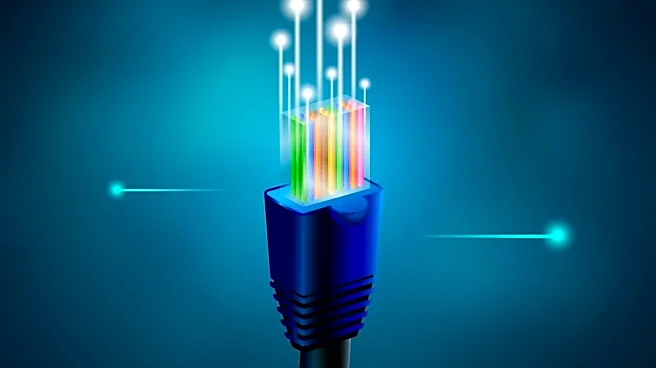
Fixing this imbalance requires a fundamental re-engineering of the networks that deliver internet to our homes. The gold standard for this new era is fiber-optic internet. Because fiber transmits data as pulses of light through glass strands, it has immense capacity and can easily offer “symmetrical” connections, where upload speeds are just as fast as download speeds. For the vast majority of Americans still on cable internet, a different revolution is underway. Cable companies are rolling out DOCSIS 4.0, a new standard that dramatically increases upload capacity over existing coaxial cable lines. By reallocating frequencies, these upgrades are closing the gap with fiber, boosting upload speeds and preparing the infrastructure for the next wave of innovation.
Powering the Next Digital Age
This quiet, technical work of enhancing upload speeds is more than just a fix for today’s annoyances. It is the foundational work that will enable the next generation of technology. Real-time, collaborative virtual and augmented reality environments are impossible without fast, stable, and symmetrical connections. The full potential of cloud computing, where powerful applications run on remote servers, can only be unlocked when there’s no meaningful delay in sending information back and forth. Even the future of online gaming and interactive entertainment relies on eliminating the lag caused by upload bottlenecks. By solving the upload problem, network engineers aren't just making your video calls smoother; they are laying the groundwork for a more interactive, responsive, and collaborative digital future.