



The Most Important Chip You Ignore
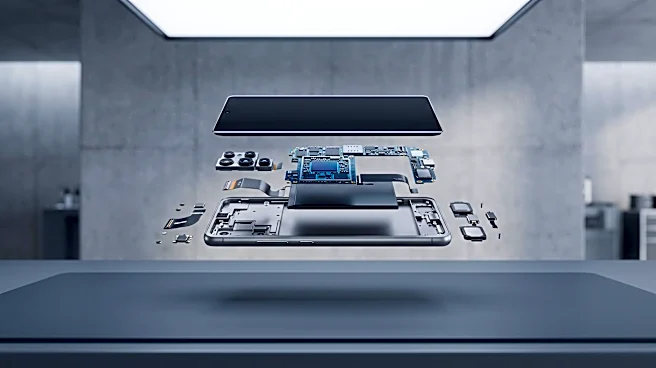
Let's be honest, no one ever bought an iPhone because of its Neural Engine. Yet, this specialized piece of hardware is the unsung hero behind many of the phone's signature features. Think of it as the iPhone's dedicated brain for artificial intelligence.
It’s what allows Face ID to recognize you in milliseconds, your Photos app to identify people and pets, and Live Text to pull information from images. Unlike the main processor (CPU) or the graphics chip (GPU), the Neural Engine is built for one thing: running trillions of calculations per second for machine learning tasks. Crucially, it does this on the device itself, without sending your data to the cloud. This on-device approach is the cornerstone of Apple's privacy-focused AI strategy, making everything faster and more secure.
The Accelerating Clue Trail
For years, the Neural Engine's power grew steadily. Then, it started sprinting. Looking back, the performance leaps have been exponential. The A12 chip in 2018 could handle 5 trillion operations per second; by the A17 Pro in 2023, that number had skyrocketed to 35 trillion. While other chip components see respectable annual gains, the Neural Engine's growth has been on a different trajectory entirely. This aggressive scaling is the "hidden clue." It's a deliberate, multi-year investment that signals Apple is building towards something big. Rumors surrounding the upcoming A20 chip, expected to be built on a new 2-nanometer process, focus on CPU and power efficiency gains of 15-30%. But the real story is what that efficiency enables: more space and power budget for an even more potent Neural Engine, potentially doubling its capabilities once again.
What a Supercharged AI Brain Unlocks
So, what’s the payoff for all this power? It’s not just about making existing features slightly faster. A monumental leap in Neural Engine performance could redefine the iPhone experience. We’re talking about an operating system that’s truly proactive—organizing your day, surfacing information before you ask, and managing notifications with near-human intuition. It could power a version of Siri that is conversational, context-aware, and entirely private, running complex language models locally. This also lays the groundwork for next-generation augmented reality, where digital information is seamlessly and instantly overlaid onto the real world. Instead of one or two standout AI features, the goal appears to be a state of ambient intelligence, where the entire device feels more alive and responsive.
Why This Could Define the Entire Event
Every year, Apple needs a compelling reason for customers to upgrade. A better camera is easy to demonstrate. A foldable design, like the rumored iPhone Ultra, is visually dramatic. But a fundamental shift in device intelligence is a much more profound, if harder to market, evolution. If the rumors hold, the iPhone 18 event won't just be about a new phone; it will be about Apple's answer to the global AI race. By leveraging its custom silicon, Apple can argue that its approach—private, on-device, and deeply integrated—is the superior path forward. The Neural Engine is the engine of that strategy. A major leap forward would allow Apple to claim it has not just the smartest iPhone ever, but the most secure and personal AI on the planet, setting the narrative for the next decade of personal computing.