







1. You’ll Type Better, Not Just Faster
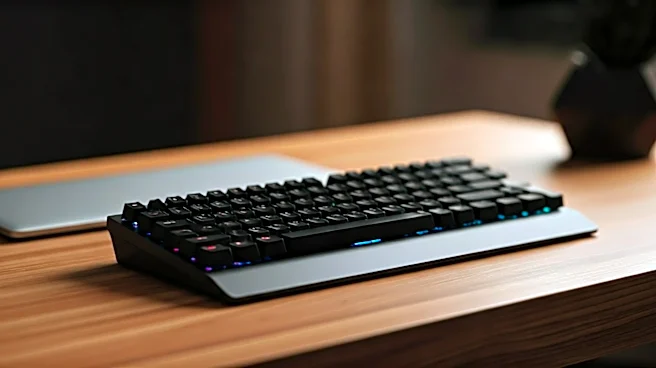
The first thing you expect from a better keyboard is faster typing. While that often happens, the real surprise is the dramatic improvement in accuracy. Laptop keyboards, designed for slimness, have very little 'key travel'—the distance a key presses down. This makes it easy to fat-finger adjacent keys or not press a key firmly enough, leading to constant backspacing. A dedicated external keyboard, especially a mechanical one, provides distinct, individual switches under each key. The result is unambiguous feedback. You know, by feel and sound, that you’ve actuated the key. This tactile certainty means fewer typos, less time spent on corrections, and a smoother, less frustrating writing flow. It’s not about raw speed; it’s about confident, deliberate
keystrokes that translate your thoughts to the screen more efficiently.
2. The Sound Becomes Your Focus Music
To the uninitiated, the 'clack-clack-clack' of a mechanical keyboard sounds like an annoyance. But for the user, it’s a revelation. Many first-timers are shocked to find the sound isn't a distraction but a feature. The rhythmic audio feedback creates a subtle, productive trance. Each click and clack is a tiny confirmation of progress, a metronome for your workflow. Unlike the dead silence or mushy thud of a standard membrane keyboard, the sound provides a satisfying rhythm that can help you stay locked into a task. It’s the sonic equivalent of watching progress bars fill up. Of course, if you share your space, there are quieter mechanical switch options, but for many solo home-workers, the sound becomes an unexpected and essential part of their concentration ritual.
3. Your Wrists and Shoulders Quietly Thank You
You might buy a keyboard for your fingers, but your entire upper body benefits. Hunching over a laptop forces your wrists into an unnatural angle and crunches your shoulders forward. It’s a posture that leads to the nagging neck, shoulder, and back pain that has become the hallmark of the remote work era. An external keyboard instantly decouples your screen from your input device. You can place the monitor at eye level (propping it up on a stack of books works wonders) while keeping the keyboard at a comfortable, natural height for your arms and wrists. This simple ergonomic separation is transformative. Days end with less physical fatigue and strain. Users who go a step further with a split or sculpted ergonomic keyboard are often stunned by how much tension they were holding without even realizing it.
4. It Creates a Mental “Work Zone”
One of the biggest challenges of working from home is the blurring line between personal and professional life. When your work machine is the same laptop you use to watch Netflix in bed, it's hard for your brain to switch off. A dedicated keyboard helps create a powerful psychological boundary. Moving to the desk and placing your hands on your 'work' keyboard acts as a mental trigger, signaling that it’s time to focus. It’s the modern-day equivalent of putting on your work shoes. Conversely, stepping away from that specific setup helps you disconnect more fully at the end of the day. It’s a small physical ritual that helps build a healthier, more sustainable work-from-home routine.
5. You Suddenly Have Opinions on “Keycaps”
Perhaps the most unexpected surprise is that a functional tool can become a fun hobby. When you get your first nice keyboard, you enter a world of customization you never knew existed. You might start by programming a key to launch your most-used application. Then you discover you can physically replace the keys themselves. These are 'keycaps,' and they come in endless colors, profiles, and materials. Before you know it, you're browsing forums and looking at artisan-made custom keycaps that match your desk mat. What begins as a practical purchase to improve your work life can blossom into a form of personal expression, turning a sterile workstation into a space that feels uniquely yours. It’s a delightful rabbit hole that makes work feel a little less like, well, work.