





From Gaming Graphics to AI Gold
Nvidia's story began in 1993 with a focus on creating graphics processing units, or GPUs, for the PC gaming market. Their GeForce cards became legendary for rendering increasingly realistic digital worlds. The key was a chip designed for parallel processing—handling
thousands of simple calculations simultaneously to draw pixels on a screen. This architecture, by a stroke of strategic foresight, turned out to be perfectly suited for the math-heavy workloads of artificial intelligence. When AI research exploded, scientists discovered that the same GPUs that powered video games could train neural networks at speeds far beyond traditional CPUs. This happy accident laid the groundwork for Nvidia’s pivot from a popular hardware vendor into the indispensable engine of modern AI.
The Real Moat: It’s the Software
While competitors like AMD and Intel focused on chip performance, Nvidia was building a wall around its hardware with software. The cornerstone is CUDA, or Compute Unified Device Architecture, a software platform first released in 2007. Think of CUDA as the operating system for the GPU. It gives developers a relatively easy way to tap into the massive parallel processing power of Nvidia's chips using common programming languages like C++ and Python. Over nearly two decades, a massive ecosystem has been built on CUDA, with millions of developers and thousands of optimized applications. Switching to a competitor’s chip means abandoning this ecosystem and rewriting huge amounts of code, a costly and complex task that creates a powerful 'lock-in' effect. This software moat is arguably more valuable than any single piece of silicon.
Selling the 'AI Factory,' Not Just the Parts
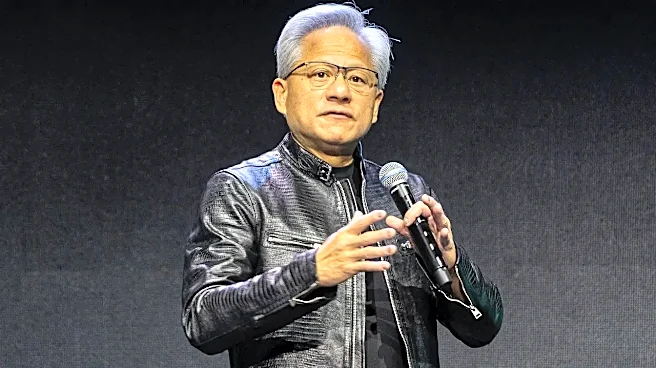
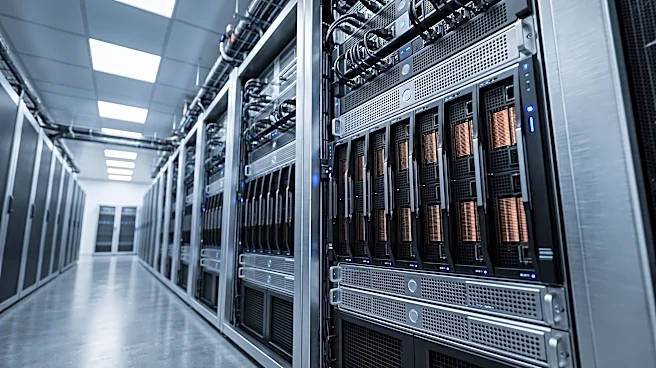
In recent years, Nvidia has taken its strategy to another level, moving from selling individual components to providing what CEO Jensen Huang calls 'AI factories'. This isn't just a chip anymore; it's a complete, integrated system designed to produce AI. A key component is the DGX system, a high-performance 'AI supercomputer in a box' that combines powerful GPUs, high-speed networking technology acquired from Mellanox, and an optimized software stack. These systems, which can be scaled up into massive clusters called SuperPODs, are designed to work together seamlessly. This full-stack approach means Nvidia isn't just competing with chipmakers; it’s providing a one-stop-shop for companies looking to build out their AI infrastructure, from hardware to enterprise-grade software like NVIDIA AI Enterprise.
The Final Layer: Cloud and Services
The capstone of Nvidia's platform strategy is its move into cloud services and recurring revenue. Instead of just selling the hardware and letting customers figure out the rest, Nvidia now offers its entire stack as a rentable service. Through DGX Cloud, companies can access Nvidia's complete AI platform through major cloud providers without having to manage the underlying infrastructure themselves. Furthermore, with offerings like NVIDIA Inference Microservices (NIM), developers can deploy optimized AI models with minimal effort. This shift from a one-time hardware sale to a recurring software and services model represents the final stage of its transformation, turning the company into a true utility for artificial intelligence—one that’s deeply embedded at every level of the AI economy.