




First, What Is a GRU?
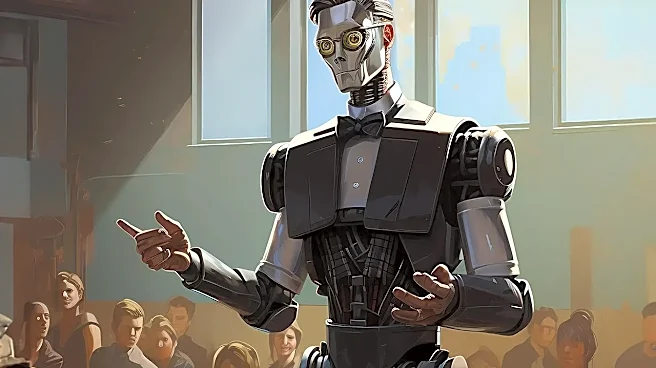
Let's clear up one thing: a GRU itself doesn't predict anything. It’s not a sentient oracle. A GRU is a type of recurrent neural network (RNN), a machine learning model designed to work with sequences of data. Think of it like a highly specialized analyst,
not a fortune teller. Introduced in 2014, GRUs were an improvement on earlier RNNs that struggled to remember information over long periods. Imagine trying to predict the end of a long movie. A basic model might only remember the last few scenes, but a GRU is designed to remember the important plot points from the very beginning, giving it the context needed to make a better guess. It's this ability to handle long-term dependencies in data that makes them so valuable for forecasting.
The Power of Selective Memory
The magic of a GRU lies in its "gates." It has two main ones: an update gate and a reset gate. In simple terms, the reset gate helps the model decide how much of the past information is irrelevant and can be forgotten. The update gate then decides how much of the important past information to carry forward. This gating mechanism allows the model to selectively retain a memory of what matters and discard the noise. For example, when forecasting stock prices, a sudden market crash from a decade ago might be crucial information to retain, while a minor daily fluctuation from last Tuesday is not. GRUs learn to make these distinctions automatically, making them more efficient and often faster to train than their more complex cousin, the LSTM (Long Short-Term Memory) network.
Real-World Predictions on a Ten-Year Horizon
So, what can this technology actually help us predict over a decade? GRUs are exceptionally good at time-series forecasting, which is the basis for many long-term outlooks. This includes modeling complex systems like climate change, where they can analyze decades of weather pattern data to forecast future trends. In economics, they can be used to forecast GDP growth, energy consumption, or shifts in financial markets by identifying deep, underlying patterns in historical data. Public health is another area. After the COVID-19 pandemic, researchers have used models like GRUs to try and forecast the trajectory of diseases over long periods, though these models are only as good as the data they're trained on. They can also be applied to things like supply chain logistics, helping businesses predict demand and potential disruptions years in advance.
The Algorithm Still Needs a Human
For all their power, GRUs have significant limitations. Their biggest weakness is that they can only learn from the data they are given. They are excellent at identifying patterns that have occurred in the past, but they cannot predict truly unprecedented events—so-called "black swans." A GRU trained on financial data before 2008 would not have predicted the global financial crisis. Likewise, no model predicted the exact timing and nature of the COVID-19 pandemic. These models can also suffer from issues like underfitting, where they produce overly simplistic or constant predictions for complex, dynamic systems. This is why human expertise remains critical. The forecasts generated by GRUs are not final answers; they are sophisticated inputs that an expert must interpret, question, and place in a broader real-world context.