







The Swiss Army Knife vs. The Scalpel
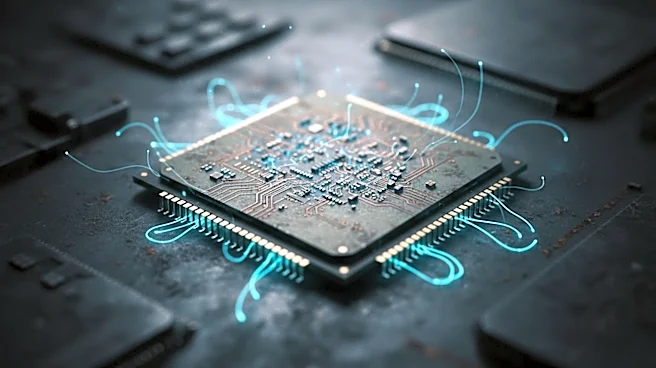
For decades, the heart of most computers has been a general-purpose processor (CPU), a sort of Swiss Army knife designed to be pretty good at everything. This is the world of Intel's x86 architecture, built on the principle that a powerful, flexible core
can handle any task you throw at it. Engineers who champion this approach argue for its vast software compatibility and mature ecosystem. Why rewrite the playbook, they ask, when this model has powered the digital revolution for half a century? Their disagreement isn't about nostalgia; it’s a pragmatic belief that the overhead of maintaining a single, powerful architecture is better than managing a zoo of specialized, incompatible components.
The Rise of the Specialists
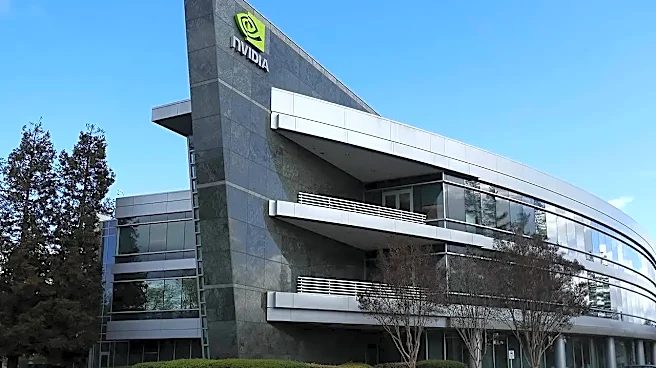
The counter-argument, which has gained enormous traction, is that the Swiss Army knife is no longer enough. As Moore's Law slows and the performance gains of general-purpose CPUs flatten, a new camp of engineers argues for Domain-Specific Architectures (DSAs). These are specialized chips, like a surgeon's scalpel, designed to do one thing exceptionally well. Think of NVIDIA's GPUs, which started for graphics but now dominate AI training, or Google's TPUs, built exclusively for machine learning. The disagreement here is philosophical: should a system be built from one master-of-all-trades component or a team of specialists? Proponents of DSAs argue it’s the only way to achieve the necessary performance and energy efficiency for demanding modern workloads like AI.
A Three-Way Battle for the Future
Perhaps the most heated debate is over the very language a processor speaks: its Instruction Set Architecture (ISA). For years, the fight was between the complex (CISC) x86 chips from Intel and AMD that run PCs and servers, and the reduced (RISC) ARM designs that power nearly every smartphone. ARM's focus on power efficiency made it a winner in mobile, and it's now making serious inroads into data centers and laptops, as seen with Apple's M-series chips. But a third challenger has entered the fray: RISC-V. Its killer feature is that it's open-source, meaning anyone can design a chip without paying licensing fees. This has created a massive rift. Senior engineers disagree on which model is best: x86’s legacy power, ARM’s efficient ecosystem, or RISC-V’s open, customizable future. It’s a battle of business models as much as engineering.
It's All About the Data
Finally, a growing number of engineers argue that the focus on the processor is misplaced. The real bottleneck, they contend, is data. Moving massive datasets between storage, memory, and the CPU consumes immense time and energy—a problem known as the "memory wall." This has given rise to data-centric architecture, a completely different way of thinking. Instead of moving data to the processor, the idea is to move the compute closer to the data. This leads to radical designs like computational storage and processing-in-memory. The disagreement is fundamental: is the computer's job to compute or to manage data? Engineers in the data-centric camp believe that solving the data movement problem is the most critical challenge for the next generation of computing.