






GPUs: The undisputed champs of deep learning
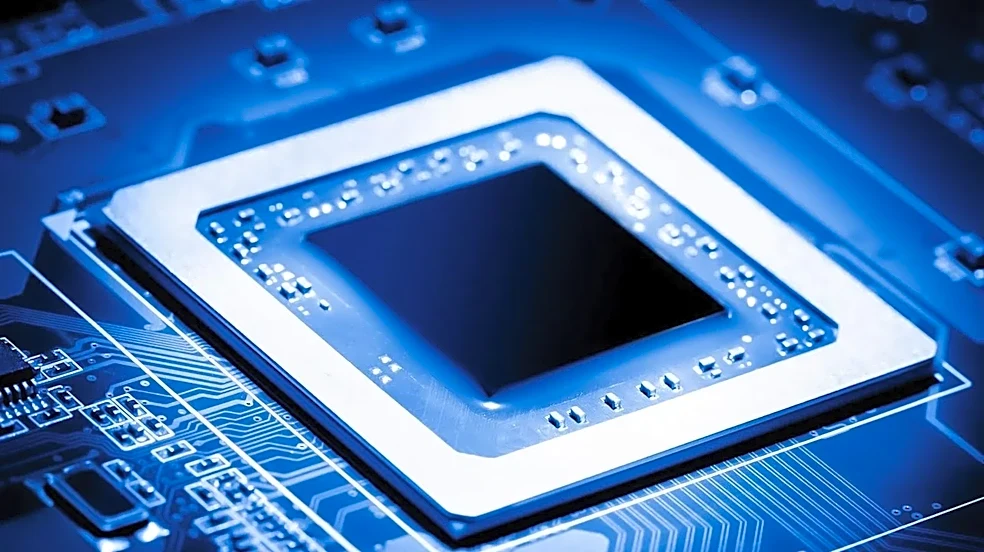
Graphics Processing Units, or GPUs, are the workhorses of the modern AI revolution for one simple reason: they are masters of parallel processing. Think of a GPU not as one hyper-fast brain, but as an army of thousands of smaller, specialized cores all working
at once. This architecture is a perfect match for the math behind deep learning, which primarily involves multiplying massive tables of numbers called matrices. Training large language models or image recognition systems is fundamentally an exercise in massive-scale linear algebra, and GPUs are built to crush exactly that kind of repetitive, parallel work far more efficiently than a traditional CPU. Their dominance isn't an accident; it's a result of their design being perfectly suited to the core tasks that define most of today's AI.
Quantum computers: A different beast entirely
Quantum computers don't work on the same principles as the devices we use every day. Instead of classical bits (0s and 1s), they use 'qubits'. Thanks to quantum phenomena like superposition and entanglement, a qubit can represent multiple values simultaneously. This doesn't just make them a 'faster' version of a classical computer; it makes them a fundamentally different kind of machine designed to solve a unique class of problems. Programming a quantum computer isn't about running the same code faster. It involves designing complex quantum circuits to manipulate these qubits. When done right, this allows them to explore a vast number of possibilities at once, providing an exponential advantage for certain tasks.
The right tool for the right workload
This is where the distinction becomes critical. A GPU is like a highly organized factory floor, perfect for assembling millions of identical products. A quantum computer is like a specialized lab for solving a single, incredibly complex riddle that has trillions of possible answers. For the bulk of AI work—like training a model to recognize patterns in data—the GPU's brute-force parallelism is ideal. Quantum computers, on the other hand, are theoretically suited for problems of immense combinatorial complexity. Think of tasks like discovering new molecules for drug development, optimizing global logistics networks, or breaking complex cryptographic codes. These aren't pattern-recognition problems; they're optimization and simulation problems where the number of variables is too vast for any classical computer to handle efficiently.
Today’s reality vs. tomorrow’s promise
While the theory is exciting, the practical reality is that quantum computing is still in its early stages. Today's quantum machines are small, expensive, and highly sensitive to 'noise' from their environment, which leads to errors. Keeping qubits stable, a property known as coherence, is a major engineering hurdle. GPUs, by contrast, are a mature and robust technology with a deep software ecosystem built over decades. Companies are not just buying GPUs; they are buying into a reliable, scalable system for developing and deploying AI. While quantum systems are becoming more powerful, they are not yet at a stage where they can handle the large-scale data processing required for most commercial AI applications.
A hybrid future, not a replacement
The most likely future isn't a battle where one technology vanquishes the other, but a collaborative one. Experts envision a 'hybrid compute' model where classical computers, GPUs, and quantum processors all work together. In this scenario, an AI orchestrator would manage a complex workflow, assigning tasks to the best-suited hardware. The GPUs would handle the heavy lifting of training and data processing, while a quantum co-processor would be called upon to solve a specific, quantum-suited optimization problem within the larger task. This allows developers to leverage the best of both worlds: the scaled efficiency of GPUs and the unique problem-solving power of quantum mechanics.