







The Pre-Transformer Dark Ages
Before 2017, natural language processing (NLP) was stuck in a rut. The dominant models, known as Recurrent Neural Networks (RNNs) and their more advanced cousins, LSTMs, had a fundamental flaw: they read text like a human, one word at a time, in sequence.
This sequential processing created two huge problems. First, it was painfully slow and couldn't be easily parallelized, meaning you couldn't just throw more computer chips at the problem to speed it up. Second, these models had terrible long-term memory. By the time they reached the end of a long paragraph, they often forgot the context from the beginning, a problem known as the "vanishing gradient." This made them unreliable for understanding the nuanced, long-range relationships that are common in human language.
A Single Paper Changes Everything
The game changed in 2017 with a Google research paper boldly titled "Attention Is All You Need." It introduced the Transformer architecture, which did away with sequential processing entirely. The core innovation was a mechanism called "self-attention." Instead of reading word by word, the model could look at all the words in a sentence at once and calculate how relevant each word was to every other word. This allowed it to understand context from all directions simultaneously. The most crucial advantage was parallelization. Because the processing wasn't sequential, the architecture could finally unleash the full power of modern GPUs, which are designed to handle thousands of operations at once. This breakthrough made it possible to train much larger and more complex models in a fraction of the time.
The Overlooked Ingredient: Brute Force
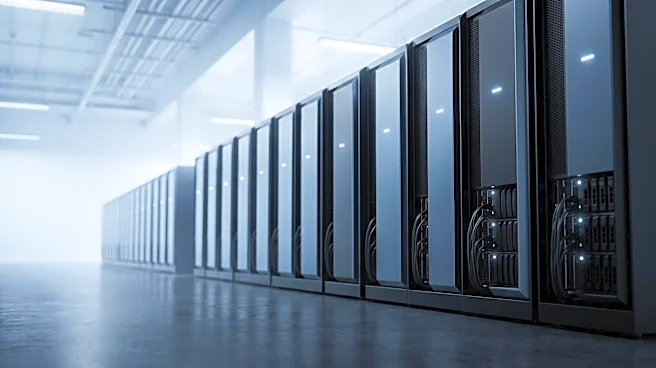
While the attention mechanism was the algorithmic key, it wouldn't have mattered without another critical component: a massive increase in accessible computing power. Training early BERT models was an epic undertaking that required computational resources far beyond what was available just a few years prior. The original BERT, released in 2018, was trained on a huge dataset of books and the entirety of English Wikipedia. This process was incredibly expensive and energy-intensive, requiring specialized hardware like Google's Tensor Processing Units (TPUs) or large clusters of powerful GPUs. In essence, the theoretical breakthrough of the Transformer architecture met the practical reality of Moore's Law. The hardware finally caught up to the ambition of the software, making it feasible to train these gigantic models on internet-scale data.
The Genius of 'Encoder-Only' Design
The original Transformer was designed for machine translation, using both an "encoder" to understand the input text and a "decoder" to generate the output text. BERT’s innovation was to realize that for many tasks, you don't need to generate new text; you just need to deeply understand the text you're given. So, its creators got rid of the decoder. BERT (Bidirectional Encoder Representations from Transformers) is an "encoder-only" model. Its sole purpose is to read text and create rich, context-aware numerical representations. By being "bidirectional," it learns from the words on both the left and right of a target word, giving it a profound grasp of context that was previously impossible. This specialized design made it exceptionally good at tasks like sentiment analysis, question answering, and classification, establishing a new paradigm where one powerful, pre-trained model could be easily adapted for dozens of specific uses.