









The Memory Chip Crisis
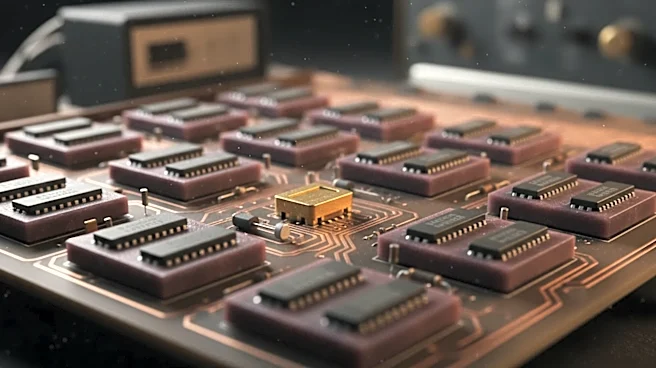
In the early 1980s, Intel wasn't known for the computer 'brains' it makes today. Its identity and revenue were built on memory chips, specifically Dynamic Random-Access Memory (DRAM). Intel had pioneered this market, but by 1985, it was a business in freefall.
A flood of high-quality, low-cost competition from Japanese firms had turned the once-lucrative market into a commodity deathmatch. Intel was losing millions, its market share had cratered from over 80% to just over 1%, and its foundational business was becoming unsustainable. For the leaders who had built the company on memories, it was an existential crisis.
The Billion-Dollar Question
The pivotal moment came in mid-1985, not in a boardroom, but in an office conversation between CEO Gordon Moore and his president, Andy Grove. Grove, looking out the window, posed a now-legendary hypothetical to his boss: "If we got kicked out and the board brought in a new CEO, what do you think he would do?" Moore's answer was immediate and unflinching: "He would get us out of memories." Grove stared back, then delivered the follow-up that would change Silicon Valley history: "Why shouldn't you and I walk out the door, come back in and do it ourselves?"
Betting the Company on Brains
That conversation was the 'strategic inflection point'. The decision was made: Intel would abandon the product line that had defined its identity and made it successful. It was an emotionally agonizing choice that involved shutting down plants and laying off thousands of employees. Instead of selling a commoditized component like memory, they would pour all their resources into a far more complex, proprietary, and high-margin product: the microprocessor. This was the 'brain' of a computer, a business they were already in but had not yet made their central focus. Just weeks after the internal decision to exit DRAMs, Intel launched the 80386 processor, a massive bet that required a $100 million investment.
The 'Intel Inside' Empire
The pivot worked better than anyone could have imagined. The 386 processor was a blockbuster success, becoming the standard for the personal computer revolution that was just beginning to explode. By focusing on this single, high-value product, Intel established a dominant market position alongside Microsoft, creating the "Wintel" duopoly that would power the vast majority of PCs for decades. The company's revenue surged from under $2 billion in 1987 to over $26 billion a decade later. This led to the famous "Intel Inside" marketing campaign, which transformed a component maker into a household name and cemented the microprocessor as the engine of its value. By 1992, Intel had become the world's largest semiconductor company.