






The Four-Step Dance That Looks Easy
At its heart, the Dynamic Host Configuration Protocol (DHCP) is designed for automation. Before DHCP, network administrators had to manually assign a unique IP address to every single device, a tedious and error-prone task. DHCP automates this with a four-step
process known as DORA: Discover, Offer, Request, and Acknowledge. Think of it like walking into a busy restaurant. Your device (the diner) shouts 'Discover!' into the network, asking if any DHCP servers (the hosts) have a table (an IP address). A server hears the call and makes an 'Offer,' reserving a specific address for you. Your device then sends a 'Request' for that offered address, and the server finalizes it with an 'Acknowledge.' Just like that, you're connected and can communicate on the network.
It's Not Ownership, It's a Lease
Here's the first wrinkle: the IP address you get isn't yours forever. It's a temporary lease. This is crucial for efficiency, as it allows a limited pool of IP addresses to be shared among many devices that connect and disconnect over time. But managing these leases adds a layer of complexity. Each lease has an expiration date. Long before it expires—typically at 50% of the lease time—your device must start a renewal process to keep its address. If the original server doesn't respond, your device gets more anxious. At the 87.5% mark, it will start broadcasting again, asking any available server to extend its lease. If this fails and the lease expires, your device is kicked off the network and has to start the DORA process all over again. This constant cycle of leasing, renewing, and rebinding is a delicate, state-dependent process that has to work perfectly to avoid disruptions.
The Problem of Scale and Location
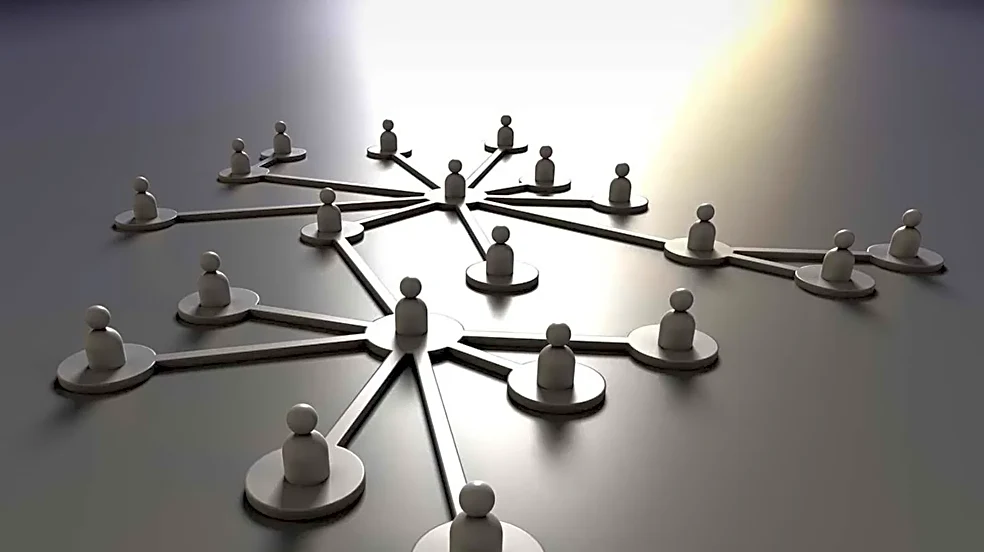
The simple DORA model assumes the client and server are on the same small network, able to hear each other's broadcasts. But what about large corporate or campus networks divided into many segments, known as subnets? Broadcast messages from a client in one subnet don't typically cross over into another, meaning a central DHCP server would never hear its request. The solution is a DHCP Relay Agent. This is a service, often running on a router, that listens for client broadcasts on one network. It then packages that request into a new message and forwards it directly to the DHCP server, which might be floors or even buildings away. The relay agent adds its own address so the server knows where the request originated and can route a response back. While this allows for centralized IP management, it introduces another point of failure and a significant amount of configuration complexity, especially in advanced setups involving multiple virtual networks (VRFs).
The Security Guard Is Often Asleep
The biggest and most dangerous complexity of DHCP is its inherent lack of security. The protocol was built for convenience, not defense. It operates without authentication, meaning it implicitly trusts the messages it receives. This opens the door for two major types of attacks. The first is a 'rogue DHCP server' attack. An attacker can set up their own malicious server on the network. If it responds to a client's 'Discover' request faster than the legitimate server, it can assign the client a malicious IP configuration. This could redirect the victim's traffic through the attacker's machine, allowing them to eavesdrop on sensitive data in a 'man-in-the-middle' attack. The second attack is 'DHCP starvation.' An attacker floods the server with fake requests from spoofed devices, quickly using up all available IP addresses in the pool. This creates a denial-of-service, preventing legitimate users from getting online. To combat this, network switches can use a feature called 'DHCP snooping' to inspect traffic and block messages from unauthorized servers, but it requires careful configuration.