




The Old Guard: Copper's Electric Past
For over a century, copper wire has been the workhorse of American communication. From the first telephone calls to the early days of the internet, it dutifully carried information by sending electrical signals through metal. Think of it like a network
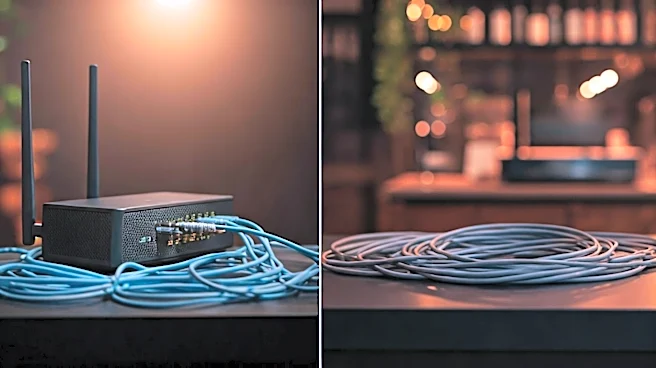
of country roads. Your data is a car, and the copper wire is the pavement. It gets the job done, but it has limitations. Most U.S. homes are still connected via some form of copper, whether it’s the twisted-pair telephone lines used for DSL or the thicker coaxial cables used for cable internet. The problem is that electricity faces resistance. The farther the signal has to travel, the weaker it gets, requiring boosters to keep it going. These country roads get congested easily (limited bandwidth), and they're susceptible to potholes and bad weather (electromagnetic interference from other power lines or appliances), which can corrupt the data and slow everything down. For the software of the 1990s, this was fine. For the demands of today, it’s a bottleneck.
The New Contender: Fiber's Light-Speed Future
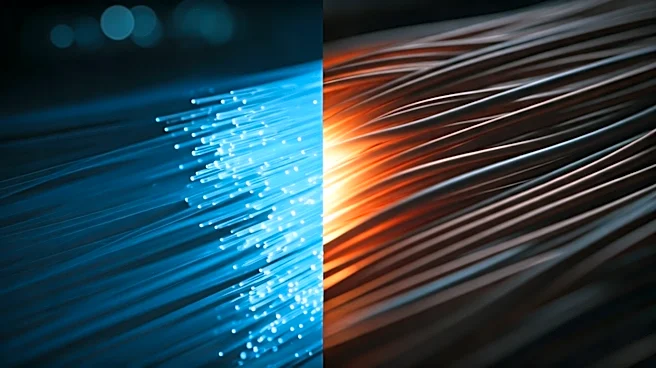
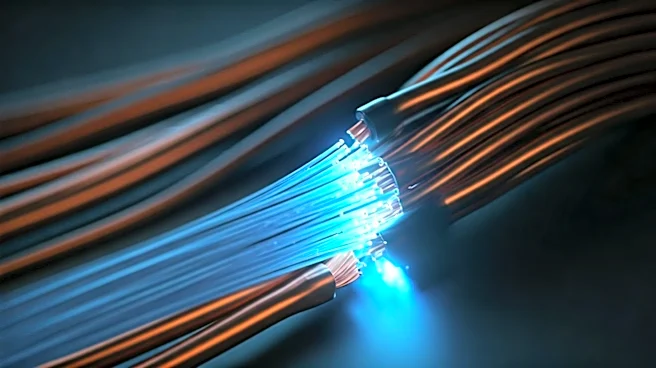
Fiber optic cable is a fundamentally different beast. Instead of sending electrons through metal, it sends pulses of light through tiny, flexible strands of pure glass. If copper is a country road, fiber is a freshly paved, ten-lane superhighway with no speed limit and no other traffic. The data is encoded into light beams that bounce along the inside of the glass tube at, literally, the speed of light. Because there's virtually no resistance, a fiber optic signal can travel dozens of miles without losing strength or clarity. It's also immune to the electromagnetic interference that plagues copper. This translates into two monumental advantages: staggering bandwidth and incredibly low latency. Fiber can carry thousands of times more data than copper, and it can deliver that data with almost no delay. It’s not just an incremental improvement; it’s a complete paradigm shift.
Why This Matters for Your Software
So, who cares about the plumbing as long as the water flows? You do, because modern software is incredibly thirsty for data. The apps and services we use daily are no longer simple programs running on our local computers. They are complex, cloud-based systems that constantly send and receive enormous amounts of information. Consider Netflix. Streaming a 4K movie requires a steady, high-bandwidth connection that copper often struggles to provide, leading to buffering. Think about a Zoom call. It’s not just about download speed; it’s about latency—the delay between when you speak and when others hear you. Fiber’s low latency makes conversations feel instant and natural, while copper’s higher latency can create that awkward “No, you go ahead” dance. Cloud gaming services like Xbox Cloud Gaming or NVIDIA GeForce NOW are entirely dependent on fiber's low latency to make remote gameplay feel responsive. Even the AI tools we’re all starting to use require massive data transfers to and from powerful servers. Simply put, the smooth, instant, high-fidelity experience that we now expect from all our software is only possible because of the highway fiber provides.
The Unfinished Revolution
If fiber is so much better, why doesn’t everyone have it? The answer lies in the “last mile”—the final stretch of connection from the main internet backbone to your home. While much of the internet's core infrastructure is already fiber, replacing the copper cables running to every single house and apartment in America is a herculean and expensive task. This is why your internet experience can be wildly different from your friend’s across town. They might live in a newer development where fiber was installed from the start, while your building is still running on coaxial cable from the 1980s. Telecom companies are slowly but surely digging trenches and laying new cable, often prioritizing wealthier, denser neighborhoods where the return on investment is highest. This has created a digital divide, where access to modern software and opportunity is dictated by the physical wires in the ground. The transition is happening, but it’s a slow, costly, and uneven revolution.