







For years, Wall Street has viewed Meta as an advertising giant. But its latest earnings report tells a different story. The healthy ad revenue is just the fuel for a much larger, more expensive ambition: winning the artificial intelligence race.
The Advertising Story You Already Know
On the
surface, Meta's third-quarter 2026 earnings looked like business as usual. The company posted strong results, with total revenue hitting $64.6 billion, a 26% increase from the previous year. Its advertising business, the engine of the 'Family of Apps' like Facebook and Instagram, brought in $63.1 billion. Ad impressions were up 10%, and the average price per ad climbed 14%. These are solid, healthy numbers that show the core business is performing well. But focusing only on these figures is like complimenting a rocket for its paint job while ignoring the massive engines designed to take it to another planet. The ad money is simply the bankroll for a much bigger, riskier, and potentially world-changing bet.
Where the Real Money Is Going
To find the real story, you have to follow the money. In the third quarter alone, Meta poured a staggering $34.9 billion into capital expenditures—spending on servers, data centers, and network infrastructure. That figure pushed the company's free cash flow into the negative, to the tune of over $2 billion. The company now expects to spend between $135 billion and $145 billion on capital projects for the full year. This isn't just about maintaining Facebook's servers. This is an unprecedented investment in the raw computational power needed to build and run next-generation artificial intelligence. While the Reality Labs division, home to the Metaverse, continues to lose billions, the focus of this spending has sharpened squarely on AI.
An Arms Race Fought with Chips
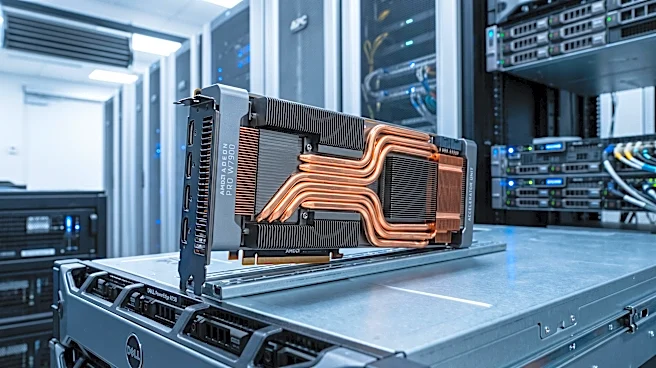
The AI arms race is fought with silicon. The billions in capital expenditures are being used to acquire the highly sought-after, extremely expensive GPUs (graphics processing units) from companies like Nvidia that are essential for training large language models. In fact, Meta's spending plans are so vast that it recently announced plans to raise up to $97.5 billion through stock sales, with key chip suppliers like Nvidia, AMD, and Broadcom expressing interest in investing. This highlights the symbiotic, and incredibly costly, relationship between AI developers and chip makers. Meta is building an arsenal of computing power to support its new AI agent, Muse, which has already attracted 10 million users, and to develop what Mark Zuckerberg calls 'personal superintelligence'. This isn't a side project; it's a foundational rebuilding of the company around AI.
Zuckerberg's Long Game: Owning the Next Platform
During the earnings call, Mark Zuckerberg's focus was clear. He mentioned the new AI agent 'Muse' nearly 50 times, while Facebook and Instagram received just a passing reference. He described the 'personal superintelligence vision' as the company's North Star. The strategy is to build AI that is not just a feature within an app, but the primary way users interact with technology. By investing so heavily in its own models and infrastructure, Meta is making a long term play to control its own destiny. For two decades, its social media empire has been dependent on the mobile operating systems of Apple and Google. By building a dominant AI platform, Meta hopes to finally own the entire ecosystem, from the foundational models to the end user experience. The goal is to get ahead of the next technological shift, even if it means sacrificing short term profits and taking on enormous financial risk.