


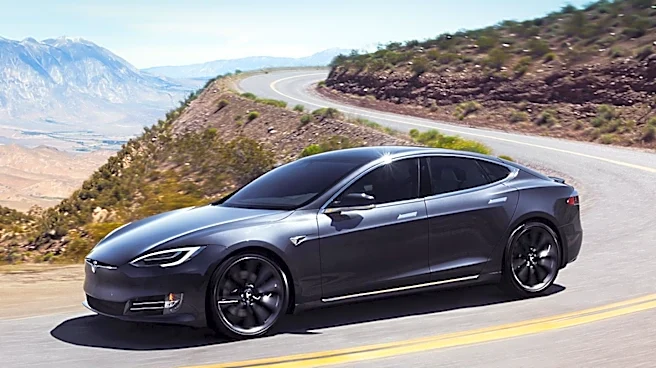
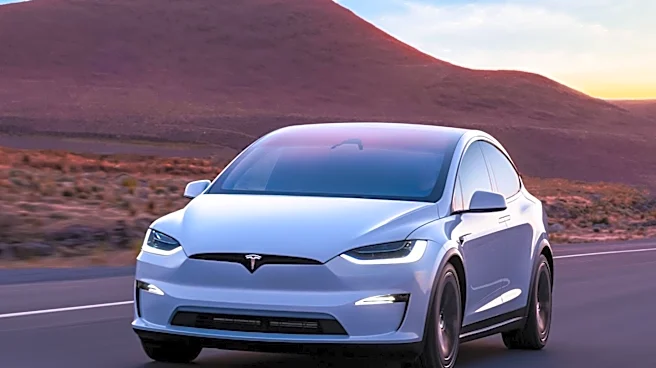
An AI Company That Sells Cars
To understand Tesla's trajectory, you have to stop thinking of it as just a car company. While its recent Q2 2026 earnings showed record deliveries, it also revealed a profit miss and negative free cash flow, largely due to massive spending. CEO Elon
Musk is pivoting the narrative, framing 2026 as a "massive capex year" dedicated to funding ambitions in AI, robotics, and, most importantly, autonomous driving. This is why Wall Street has long afforded Tesla a valuation that dwarfs traditional automakers. The bet isn't on selling millions of electric vehicles; it's on solving autonomous driving and deploying a fleet of robotaxis. During the earnings call, Musk emphasized this, stating that for many customers, the primary purchase is now "full self-driving with a car attached."
The Promise on the Balance Sheet
The abstract promise of self-driving has a very concrete place in Tesla's financials: deferred revenue. For years, when customers purchased the Full Self-Driving (FSD) package, Tesla could only recognize a portion of that cash as revenue. The rest sits on the balance sheet as a liability—money collected for a product not yet fully delivered. As Tesla rolls out features and gets closer to true autonomy, it can "recognize" more of this deferred revenue, turning it into pure, high-margin profit. While the company has recently shifted to a subscription model that has seen paid customer numbers jump to nearly 1.5 million, the principle remains. The journey to full autonomy isn't just a technical challenge; it's a multi-billion dollar accounting event waiting to happen.
The Robotaxi Dream
The ultimate expression of this strategy is the robotaxi network. The vision is a fleet of autonomous Teslas, available on-demand, generating revenue for the company (and potentially for their owners) with no driver required. During the latest call, Musk spent significant time on the robotaxi concept, even as he cautioned that scaling it is a monumental task. The company is proceeding carefully, aware that a single high-profile accident could trigger a severe regulatory crackdown. Still, the buildout is underway, with the company reporting that its unsupervised robotaxi fleet has driven over 380,000 miles across six cities with no notable incidents. This long-term, capital-intensive bet is why Tesla is spending more than $25 billion this year—it's racing to build the infrastructure for a business that, if successful, would redefine mobility and its own financial future.
Reality Check: The Road Is Still Bumpy
So, can you trust the car to drive itself today? The answer is a firm no. Tesla's system is officially named "FSD (Supervised)," and it requires constant driver attention. It is a Level 2 driver-assistance system, far from the Level 4 or 5 autonomy that defines a true robotaxi. Users still report a host of issues, from hesitant lane changes and phantom braking to awkward routing. More seriously, the technology remains under scrutiny from regulators and is the subject of class-action lawsuits alleging that the company sold hardware incapable of achieving true autonomy. Some former Tesla employees who worked on the system have even voiced their own lack of trust in its capabilities. These technical and legal hurdles represent the massive gap between Tesla's current product and its ultimate valuation-driving dream.