







First, What Is a TPU?
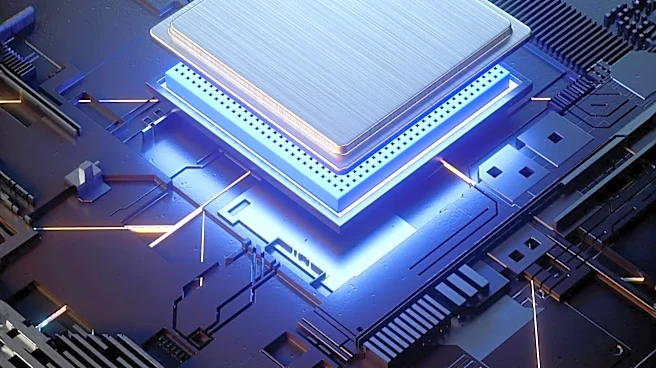
A TPU, or Tensor Processing Unit, is a custom-built chip Google designed specifically to accelerate AI workloads. Think of it like this: a CPU (Central Processing Unit) is a generalist, a jack-of-all-trades that runs your operating system. A GPU (Graphics
Processing Unit) is a specialist for parallel tasks, which is why it's great for both video games and AI. The TPU is an even more extreme specialist. It was designed from the ground up to do one thing exceptionally well: the massive matrix and vector math that forms the backbone of neural networks. Its architecture, known as a systolic array, is built to efficiently handle these 'tensor' operations, which dramatically speeds up AI model training and inference.
The Argument for Unmatched Efficiency
Proponents of TPUs point to their raw performance and efficiency on specific tasks. For large-scale AI model training, especially when using frameworks like TensorFlow or JAX, TPUs can be significantly faster and more power-efficient than GPUs. Because they are purpose-built, they spend less energy moving data around and more energy on the actual math, tackling what’s known as the 'Von Neumann bottleneck'. This translates to tangible business benefits: lower energy bills, a smaller carbon footprint, and faster time to get massive models trained. At the scale of thousands of chips working together in 'pods', Google's custom interconnects can also give TPUs an edge over GPU clusters for huge, demanding jobs.
The Case for Flexibility and a Bigger Tent
On the other side of the debate, engineers argue for the flexibility and mature ecosystem of GPUs, dominated by NVIDIA. The GPU is a more general-purpose parallel processor. This makes it adaptable to a wider variety of workloads beyond just the specific matrix math TPUs excel at. The biggest advantage for GPUs is the software. NVIDIA’s CUDA platform is a deep, mature ecosystem that a huge community of developers knows and uses. While TPUs have improved support for frameworks like PyTorch, they are most native to Google's own JAX and TensorFlow. For teams with codebases full of custom CUDA kernels or those who value the ability to run on any cloud provider, the 'porting tax' to use a TPU can be a dealbreaker.
The Hidden Cost of Being Locked In
This is where the engineering debate becomes a business strategy discussion. Historically, TPUs have only been accessible through Google Cloud. Choosing to build your AI stack on TPUs meant committing your workload, data, and potentially your entire infrastructure to a single vendor. This 'vendor lock-in' is a significant risk for many companies that prefer a multi-cloud strategy or the option to move their operations to a different provider for cost or performance reasons. While GPUs can be bought, installed in a company’s own data center, or rented from dozens of providers, TPUs have largely been a rental-only, single-platform option. Recent deals with partners like Blackstone may signal a slight opening, but for most, the GPU market offers far more freedom.
So, Who Is Right?
The disagreement persists because there is no single right answer; it's a classic trade-off. The decision depends entirely on a company’s specific needs. An engineering leader at a company deeply embedded in the Google Cloud ecosystem, training massive, standardized models for weeks at a time, might find TPUs to be a clear win on cost and performance. Conversely, a startup that needs to stay nimble, use a variety of open-source models primarily written for PyTorch, and maintain the flexibility to switch cloud providers will almost certainly lean toward the broader, more open GPU ecosystem. The debate isn't about which chip is 'better' in a vacuum, but which one presents the right set of compromises for a given team’s budget, workflow, and long-term strategy.