




Ask two security engineers about moving a factory's operations to the cloud, and you’ll likely get two different answers. The debate isn't just about technical specs; it’s a fundamental disagreement with huge stakes for modern manufacturing.
Two Tribes: The World of IT vs. OT
To understand
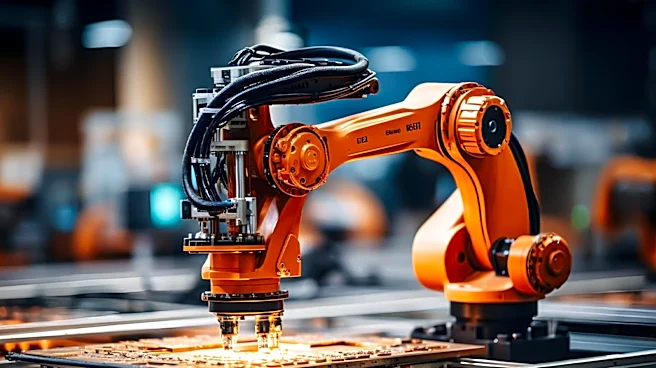
the conflict, you first need to know who's fighting. In one corner, you have Information Technology (IT). These are the folks who manage data, networks, and business systems like email and servers. Their world is one of data confidentiality and preventing breaches. In the other corner, you have Operational Technology (OT). These are the engineers who manage the physical machinery on the plant floor—the industrial control systems (ICS), robotic arms, and safety sensors that actually make things. For decades, these two worlds were separate. IT lived in the server room, while OT lived on the factory floor, often 'air-gapped' or physically disconnected from the internet for protection. The push for 'smart factories' and the Industrial Internet of Things (IIoT) has forced these two tribes together, and they don't always speak the same language.
A Different Definition of 'Worst-Case Scenario'
The core of the disagreement comes down to one question: What’s the worst that could happen? For an IT security professional, the priorities are Confidentiality, Integrity, and Availability (CIA). The nightmare scenario is a data breach. For an OT engineer, the priorities are inverted: Availability, Integrity, and Confidentiality (AIC). But really, the top priority is something IT rarely has to consider: physical safety. An IT failure means data is lost or a website goes down. An OT failure means a production line halts, expensive equipment is damaged, or a person could get hurt. While an IT team worries about a ransomware attack encrypting files, an OT team worries that same attack could manipulate a valve or disable a critical safety system.
The Cloud: A Tool for Efficiency or a New Attack Vector?
From an IT perspective, the cloud is a mature solution offering incredible security tools, scalability, and centralized management. Cloud providers have armies of security experts and proactive monitoring that most companies can't afford on their own. But from an OT perspective, connecting previously isolated systems to the internet creates a massive new attack surface. Every sensor and controller connected to the cloud is a potential entry point for an attacker. These systems were never designed to be connected to the internet. A simple misconfiguration could expose critical machinery to anyone, anywhere. This isn't theoretical; attackers now specifically target industrial operations, knowing that production downtime is incredibly costly.
The Friction Point: To Patch or Not to Patch?
Nowhere is the culture clash clearer than with updates and patching. IT culture demands constant patching. A new vulnerability is found, a patch is released, and it's applied immediately to protect the data. In the OT world, it’s not that simple. You can't just reboot a production line that's been carefully calibrated to run 24/7. A patch that works perfectly on a laptop could cause a programmable logic controller (PLC) on the factory floor to behave unpredictably. Furthermore, OT equipment often has a lifespan of 15-20 years, far longer than the 3-5 years of typical IT hardware. The HMI (Human-Machine Interface) running a critical piece of machinery might be on Windows XP, because that’s all the vendor supports. For the OT engineer, the risk of an unplanned shutdown from a bad patch is often seen as greater than the remote risk of a cyberattack.