







Google's 'AI Everywhere' Gambit
At its annual I/O conference, Google didn't just announce AI features; it declared AI as the new core of its entire universe. The strategy, centered around its powerful Gemini family of models, is one of total immersion. Google wants its AI to be everywhere:
organizing your photos, summarizing your emails, planning your trips, and acting as a conversational search engine that replaces the old blue links. This is a natural extension of Google’s original mission—to organize the world’s information—but supercharged. Their advantage is a massive, decade-long head start in AI research and an unparalleled trove of data. The bet is that users want an omniscient, all-powerful assistant that lives in the cloud and can be accessed from any device. The implicit trade-off is the one Google has always offered: give us your data, and we’ll give you a smarter, more personalized world. For Google, the platform isn’t the phone; it's the AI-powered cloud itself.
Apple's Walled Garden of Intelligence
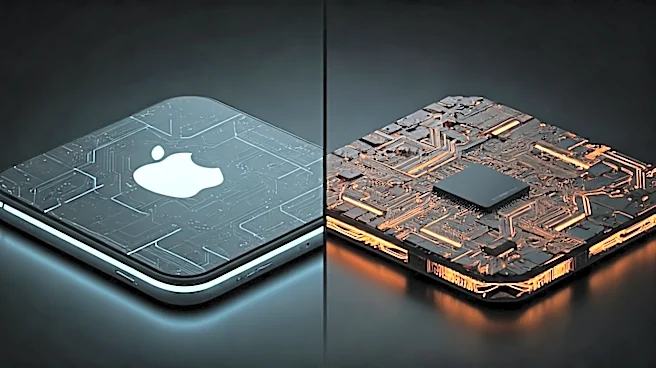
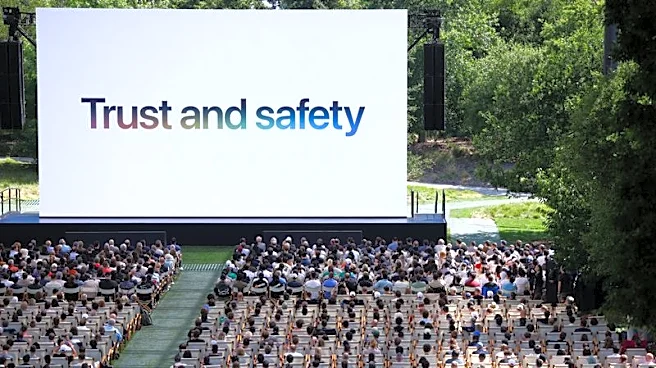
Apple, arriving characteristically late but with immense polish, took a fundamentally different path at its Worldwide Developers Conference (WWDC). It didn't call its system 'AI'; it branded it 'Apple Intelligence.' This wasn't just marketing—it was a statement of purpose. Apple’s strategy is not to build an all-knowing oracle in the cloud, but a deeply personal and private assistant that lives primarily on your device. The focus is on 'personal context.' Apple Intelligence is designed to understand you, your relationships, your calendar, and your data, all while processing as much as possible on the iPhone's own chip. It’s not about answering trivia; it's about helping you find a photo your mom sent you last week or summarizing a group chat. The approach is defensive, privacy-first, and ecosystem-centric. Apple is betting that in a world of data leaks and creepy algorithms, users will value an AI they can trust, one that works for them without reporting back to a corporate mothership.
A Clash of Philosophies
The differences frame a classic tech showdown. Google is pursuing a strategy of overwhelming capability. Its multi-modal Gemini models can see, hear, and reason in ways that feel like science fiction. It’s a maximalist approach that prioritizes power and ubiquity. Apple is pursuing a strategy of utility and trust. Its AI is designed to be helpful in small, everyday moments, with privacy as its bedrock principle. Even its high-profile partnership with OpenAI to bring ChatGPT to Siri is framed as an optional, explicitly-permissioned-each-time add-on, not a core function. This is the central conflict: Google’s AI is a public utility powered by the cloud; Apple’s AI is a private butler living in your pocket. One offers omniscience, the other offers intimacy. One is building a god-like brain for the world; the other is building a better, more personal tool for its loyal customers.
The Battlefield in 2026
Projecting forward to 2026, the outlines of the true conflict become clearer. This won't be about which chatbot is wittier. The winner will be determined by which ecosystem’s AI becomes more indispensable. Will users gravitate toward Google’s raw power, which can plan a complex vacation in seconds and analyze a 100-page PDF for you? Or will they prefer Apple’s subtle integration, which might not write a novel but will always know which photo of your dog to show you, without you ever worrying where that data is going? The fight will be over which philosophy creates a more compelling, useful, and sticky platform. By 2026, we’ll see these dueling strategies mature from feature sets into fully-fledged operating systems for life, with AI not as an app you open, but as the ambient intelligence that underpins everything you do.