




The Annual Ritual of Speed
As expected, Apple's September keynote delivered the goods for hardware enthusiasts. The new iPhone 18 Pro and its larger sibling are built around the A20 Pro chip, the company’s first on a 2-nanometer process. Apple touted the usual impressive metrics:
a CPU up to 20% faster, a seven-core GPU providing a 40% graphics boost, and a new vapor chamber to improve sustained performance. The Pro Max model now boasts an astonishing 45 hours of video playback. These are significant engineering achievements. In any other year, the A20 Pro would have been the undisputed star, a testament to Apple's silicon dominance that allows its phones to rival the single-core performance of some desktop-class chips. But this year felt different. This year, the predictable march of gigahertz and teraflops was merely the opening act.
The Voice That Stole the Show
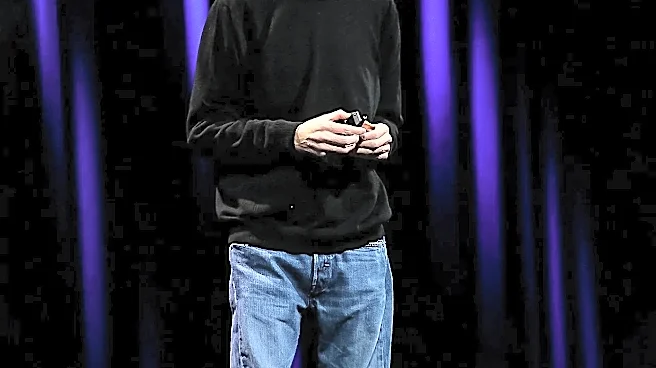
The real jaw-on-the-floor moment came when Craig Federighi, Apple’s software chief, began to demonstrate the new “Siri AI.” After years of being the butt of jokes and falling behind competitors, Siri has been reborn. This wasn't the old Siri that struggled with basic context. Federighi showcased a digital assistant that could understand complex, multi-part commands, take actions across different third-party apps, and understand the context of what was on the user’s screen. The demonstration showed Siri not just as a voice command tool, but as a proactive, intelligent layer integrated across the entire operating system. This deep integration and contextual awareness, powered by a new dual 16-core Neural Engine in the A20 Pro, is the leap fans and critics have been demanding for a decade.
A Wager on Intelligence, Not Gigahertz
For years, the smartphone industry has been in a performance trap. Phones have been “fast enough” for the average user for a long time. The practical difference between one generation’s chip and the next has become increasingly hard for most people to perceive in daily tasks. Apple’s big strategic pivot with the iPhone 18 is a bet that the next frontier isn’t raw speed, but ambient intelligence. By pouring resources into a smarter Siri, Apple is tacitly admitting that the brain is now more important than the brawn. This shift, reportedly spearheaded by Federighi himself, reorients Apple's entire AI strategy. The focus is now on on-device processing to ensure both speed and privacy, a core Apple tenet. The massive boost in memory bandwidth and the doubled Neural Engine cores in the A20 Pro weren't just for faster gaming; they were built specifically to enable a powerful, low-latency AI that lives on your phone, not just in the cloud.
Why a Smarter Siri Changes Everything
A truly capable AI assistant fundamentally changes our relationship with our phones. It moves the device from a collection of apps we have to manually navigate to a unified tool that anticipates our needs. If the new Siri can reliably book a reservation, summarize a group chat, and then add a calendar event without fumbling, it saves us cognitive load and time in a way that a 20% faster processor simply cannot. It transforms the iPhone from a powerful pocket computer into a genuine personal assistant. This is the battleground where the next decade of consumer tech will be fought. While competitors have offered capable assistants for years, Apple’s control over its hardware and software stack gives it a unique advantage for deep, secure integration. Federighi's demonstration wasn't just showing off a new feature; it was unveiling the foundation for Apple's next decade.