







The AI boom is hard to miss, but the real revolution is happening behind the scenes. The staggering computational power required by AI labs like Anthropic is forcing a once-in-a-generation shift in the multitrillion-dollar semiconductor industry.
An Unprecedented Thirst for Power
To understand
the shift, you have to understand the sheer scale of the demand. Training and running frontier AI models, like Anthropic's Claude family, requires a colossal amount of computational power, or 'compute'. Recent IPO filings revealed Anthropic has committed to spending nearly $901 billion on future compute and infrastructure. These aren't just powerful PCs; they are massive, purpose-built supercomputers housed in data centers, often leased from cloud giants like Google and Amazon. These deals involve tens or even hundreds of billions of dollars committed over several years to secure access to the specialized chips needed to push AI capabilities forward. This level of concentrated demand from a handful of leading AI companies is unlike anything the tech industry has seen before, creating a firehose of cash aimed directly at the makers of the world's most advanced silicon.
Beyond the GPU Shortage
For the last few years, the story has been dominated by one company: Nvidia. Its graphics processing units (GPUs) became the default engine for the AI revolution, and the company still commands roughly 75-85% of the market for AI accelerator revenue. But the story is getting more complex. The intense demand and high cost of GPUs have created a massive incentive for AI companies and their cloud partners to find alternatives. This has supercharged the development of custom-built chips, known as Application-Specific Integrated Circuits (ASICs). Giants like Google with its Tensor Processing Units (TPUs) and Amazon with its Trainium chips are pouring billions into creating their own silicon, specifically optimized for their AI workloads. The growth in these custom chips is projected to be nearly triple that of general-purpose GPUs in 2026, signaling a major strategic diversification away from a single supplier.
A New Arms Race for Chipmakers
This diversification is reshaping the competitive landscape. While Nvidia remains dominant, its near-monopoly is facing real challenges for the first time. AMD has emerged as a credible second source, securing major deals with giants like Microsoft and Meta. Intel, after a slow start, is regrouping with its own AI-focused chips. But the biggest shift is the rise of the cloud providers as major chip designers themselves. By designing their own ASICs like TPUs and Trainium, Google and Amazon are not just Nvidia's biggest customers; they are now significant competitors. This new arms race is forcing every player to innovate faster, from designing more powerful and energy-efficient architectures to developing the complex software needed to run them. The battle is no longer just about who can make the fastest chip, but who can provide the most efficient, cost-effective, and powerful full-stack system for AI.
Remaking the Entire Supply Chain
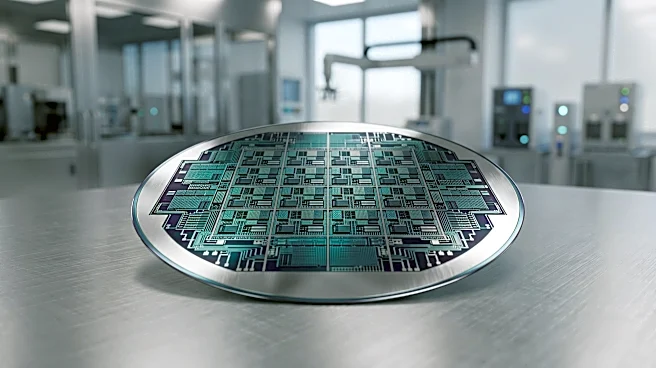
The ripple effects extend far beyond the chip designers. The immense demand is putting pressure on the entire semiconductor supply chain. Foundries like TSMC, which physically manufacture the chips for Nvidia, AMD, and the cloud giants, are seeing record demand for their most advanced manufacturing processes. The surge is also creating bottlenecks in newer areas like advanced packaging and highndensity memory (HBM), components essential for stitching powerful chips together. The immense, longterm purchasing commitments from companies like Anthropic give them unprecedented leverage. They can influence the technology roadmaps of chip designers and manufacturers, ensuring the industry is building the specific hardware they need for future AI models. This feedback loop, where the biggest AI consumers are directly shaping the future of silicon, is accelerating the pace of innovation across the entire industry.