
The Race to Trip Over the Finish Line
Let’s be honest: the AI race of the last 18 months has been chaotic. It’s been a mad dash to impress, to ship, and to claim territory, often with messy results. Google’s AI Overviews started telling users
to put glue on their pizza, and its image generator created historically nonsensical pictures. Microsoft announced its much-hyped “Recall” feature for Copilot+ PCs, which was so immediately and thoroughly panned by security experts as a privacy nightmare that the company was forced to walk it back before it even launched. These companies, in their haste to prove their AI dominance, have been treating their users like beta testers. They’ve prioritized demonstrating raw capability over delivering a thoughtful, reliable user experience. It’s the classic tech equivalent of moving fast and breaking things. The problem is, when you’re dealing with AI that is supposed to be a trusted assistant, breaking things means breaking user trust—a commodity that’s much harder to repair than a software bug.
Selling an Experience, Not a Model
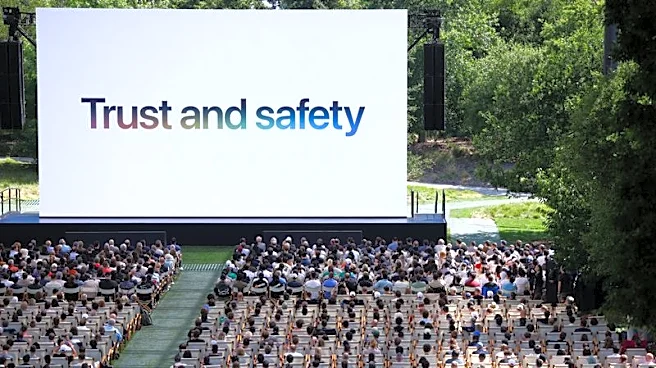
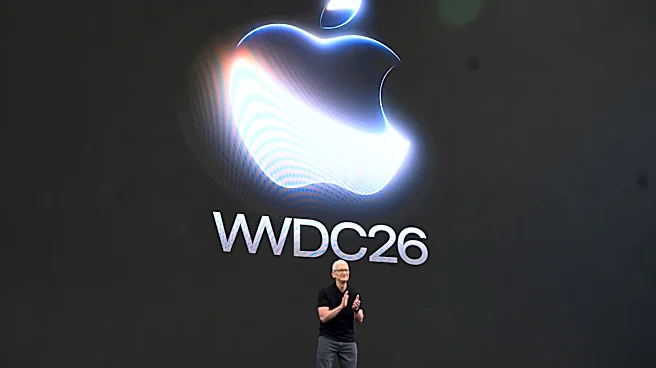
Enter Apple at its Worldwide Developers Conference (WWDC). Instead of unveiling a god-like, all-knowing AI chatbot to rival ChatGPT, it presented something far more subtle: “Apple Intelligence.” It’s not a single product you can point to, but a layer of smarts woven into the fabric of the operating system. Crucially, much of the processing happens on your device, ensuring your personal data stays personal. For more complex tasks, Apple created “Private Cloud Compute,” a system designed to process data on secure servers without Apple ever being able to see it. This isn't about having the largest Large Language Model (LLM) or generating the most spectacular images from a text prompt. It’s about making your existing digital life a little bit easier. It’s about an AI that can understand the context of your emails, photos, and messages to perform useful tasks, like finding a specific document a colleague sent you last week. It’s less of a flashy demo and more of a practical utility. Apple isn't selling AI; it's selling a smarter iPhone. And that’s a distinction its competitors are struggling to make.
Privacy as the Ultimate Moat
For years, critics have sometimes mocked Apple’s relentless focus on privacy as a marketing gimmick. In the age of generative AI, it’s suddenly become their most powerful weapon. The fundamental trade-off of most AI systems is that you have to feed them your data. You give Google your search history, Microsoft your documents, and Meta your social life in exchange for their AI services. Apple is flipping that model on its head. Its pitch is that you can have the benefits of powerful AI without making the privacy trade-off. This is a moat that competitors, whose business models are often built on data collection, will find almost impossible to cross. By establishing trust as the bedrock of its AI strategy, Apple is playing a different game. It’s not about which AI is smartest today, but which one you’ll trust with your entire digital life tomorrow.
The 2026 Payoff
This brings us to 2026. By then, the initial novelty of generative AI will have worn off. Users will have experienced the downsides of buggy, unreliable, and privacy-invasive systems. The market won't be wowed by chatbots that can write a poem; they’ll demand AI that works seamlessly, reliably, and privately within the tools they use every day. The demand will be for polish, not potential. This is where Apple’s “slow” strategy is poised to pay off. For two years, it will have been refining Apple Intelligence, integrating it deeper into its OS, and training users to trust its on-device and private-cloud approach. When it partners with other models, like OpenAI’s ChatGPT, it does so as an optional, explicitly-permissioned add-on, reinforcing the idea that your core experience is private. By WWDC 2026, Apple won’t be trying to convince you to use its new AI feature. The AI will simply be an invisible, indispensable part of what makes an iPhone an iPhone. It will be the mature, stable, and secure platform in a market still reeling from the “move fast and break things” era.