








The Bedrock of Your Digital World
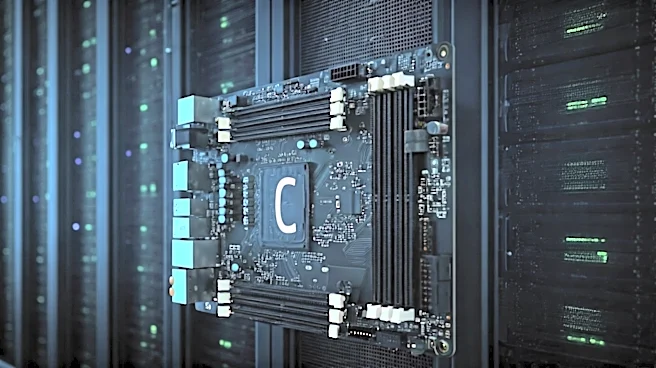
Think of the C programming language not as an old building, but as the bedrock it’s built on. Created in the early 1970s by Dennis Ritchie at Bell Labs, C was designed to be fast, efficient, and close to the hardware. This unique combination made it the perfect
tool for a monumental task: writing the Unix operating system. That single decision created a ripple effect that defines computing to this day. Nearly every major operating system—from the macOS and iOS on your Apple devices to the Windows on your PC and the Linux running most of the internet's servers—has a kernel written primarily in C. Why? Because the kernel is the absolute core of an OS, managing memory, CPU time, and peripherals. This requires raw speed and direct, unforgiving control over the computer’s hardware. Higher-level languages provide safety nets and abstractions that, while convenient, add overhead. For the heart of an operating system, that overhead is an unacceptable tax on performance. C provides the power and control needed to build the stable, high-performance foundation on which all other software sits.
Powering the Things That Don't Look Like Computers
The next time you’re in your car, look at the dashboard. The infotainment system, the anti-lock brakes, the engine control unit—they are all powered by embedded systems. These are tiny, specialized computers designed for one job, and they are everywhere: in your microwave, your smart TV, your router, and even in life-critical medical devices like pacemakers and infusion pumps. In this world, C is king. The code for these devices needs to be incredibly efficient, reliable, and have a minimal memory footprint. You can't afford a 'garbage collection' pause in a pacemaker's code, nor can you fit a massive runtime library onto a chip that costs a few cents. C compiles to compact, fast machine code that can run on even the most resource-constrained hardware. Its direct memory management, while a source of headaches for application developers, is a necessary feature for engineers who need to control every last byte of memory in a system where every byte counts.
The Engine of Global Finance and Science
In the world of high-frequency trading (HFT), winning or losing can come down to nanoseconds. When algorithms are executing millions of trades per second, the speed of the underlying code is not just a feature; it's the entire business model. This is another domain where C, along with its successor C++, dominates. Traders and quantitative analysts build systems in C to minimize latency and ensure their orders reach the exchange fractions of a second faster than their competitors. The same principle applies to the world of scientific computing. Whether it's modeling complex climate systems, simulating molecular dynamics, or processing data from the Large Hadron Collider, researchers need to crunch colossal amounts of data. The libraries used for this high-performance computing (HPC) are often written in C or Fortran to squeeze every last drop of performance out of supercomputing clusters. When your calculations take weeks to run on thousands of processors, a 5% speed-up from efficient code saves an immense amount of time and resources.
The Unseen Plumbing of the Internet
You might be building your startup’s beautiful web application with Ruby on Rails or Django, but the software that serves it to the world is likely written in C. Foundational internet infrastructure—from web servers like Nginx and Apache to databases like PostgreSQL and SQLite—relies on C for its core implementation. These programs need to handle tens of thousands of concurrent connections, manage massive datasets, and run reliably for months or years without interruption. C provides the tools to build this kind of robust, high-performance 'plumbing.' Even Git, the version control system that is the backbone of modern software development, was written in C by Linus Torvalds for the express purpose of managing the Linux kernel source code. He needed something blazingly fast, and C was the obvious choice. The very tools modern engineers use to build software in other languages are, themselves, a testament to C's enduring power.