








Qualcomm's Two-Sided Kingdom
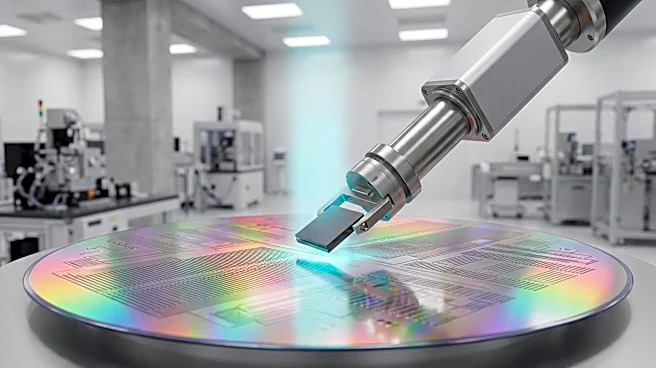
First, it’s helpful to understand what Qualcomm actually is. Unlike companies that build and sell you a finished phone, Qualcomm operates two distinct but related businesses. The first is Qualcomm CDMA Technologies (QCT), which designs and sells the 'brains'
of many of the world's smartphones—the famous Snapdragon processors and modems that handle everything from processing power to connecting to 5G networks. This is the side of the business that makes physical things, or at least designs them. The second, and arguably more powerful, side is Qualcomm Technology Licensing (QTL). This division doesn't sell products; it licenses the company's massive portfolio of patents. Essentially, any company that wants to build a device that connects to modern cellular networks (3G, 4G, 5G) has to pay Qualcomm a fee for the right to use its foundational technology. This creates a steady stream of high-profit royalty income.
The Fork in the Road
In the late 1980s and early 1990s, the world of mobile communication was a wild west. Analog was king, but its limitations were clear. Qualcomm, founded in 1985 by Irwin Jacobs and a handful of colleagues, was championing a digital technology called Code Division Multiple Access (CDMA). They believed it was vastly superior for handling more calls with better clarity than the competing TDMA standard. But they faced a classic business dilemma: should they become a manufacturer and build all the phones and network equipment themselves, or should they focus on the technology itself? At the time, the company was having some success with its OmniTRACS satellite system for trucking companies, but it was also forced to get into manufacturing to prove CDMA worked, and it was a struggle. The company was inexperienced with mass manufacturing and faced significant challenges.
The Single Decision: License the Idea, Not Just Build the Product
This is where the pivotal decision came into play. Instead of trying to out-compete established manufacturing giants, Irwin Jacobs and the leadership team made a fateful choice: they would primarily be an intellectual property company. They decided to license their groundbreaking CDMA patents to other manufacturers. This was a strategic masterstroke. It lowered the barrier for other companies to adopt CDMA, as they didn't have to invent it from scratch. They could just pay Qualcomm a royalty. This decision effectively turned potential competitors into customers. Instead of fighting for a slice of the hardware manufacturing pie, Qualcomm positioned itself to get a small piece of almost every pie. This model allowed the company to focus on what it did best—research and development—while collecting royalties from the entire industry’s growth.
How the Model Fuels a Tech Empire
This dual approach is why Qualcomm is so resilient. The QCT chip business generates massive revenue, but it’s a competitive, lower-margin business. The QTL licensing business, however, generates the bulk of the company's profit. It’s a high-margin revenue stream that funds the next wave of R&D, which in turn creates new patents that feed the licensing business. It’s a self-perpetuating cycle of innovation and monetization. Even companies that don't use Qualcomm's chips, like Apple in certain phone generations, have historically had to pay licensing fees to QTL because their devices use the fundamental cellular standards built on Qualcomm's patents. This foundation, set decades ago, is why the company remains a central player as the world transitions from 4G to 5G and now looks toward 6G and AI-powered devices.