




The Usual Suspects of Progress
Let’s get the standard upgrades out of the way, because they were impressive. OpenAI’s DevDay on September 29th delivered a familiar batch of welcome news. A new flagship model, GPT-6.1 Sol, promises near-Astra level intelligence for coding and professional
tasks at a fraction of the cost. An 'Ultrafast' tier was announced, boasting speeds up to 300 tokens per second for those who need real-time generation. They even unveiled 'ChatGPT Space,' a new collaborative environment for teams. These are all solid, valuable improvements. They make existing workflows cheaper, faster, and more efficient. For most recaps, these announcements would be the story. But they aren't the revolution.
The Real Headliner: Autonomous Agents That Use Your Tools
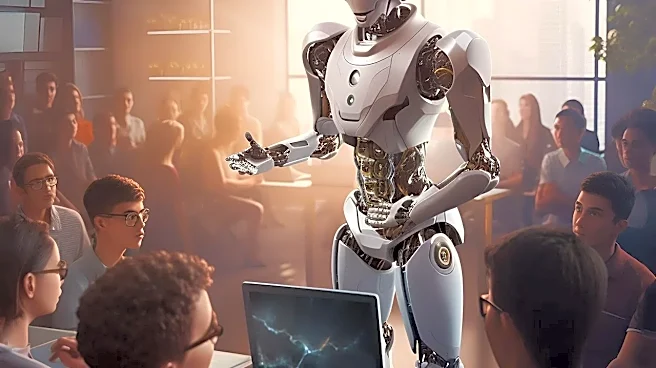
The single capability that overshadowed everything else was buried in an update to the 'Agents API'. It now officially supports 'computer use'. This sounds deceptively simple, but its implications are enormous. Previously, AI agents could use APIs you explicitly gave them. Now, they can be built to interact with software the way a human does: through graphical interfaces. This wasn't just about code generation; it was about execution. One demo showed an agent, dubbed a 'Dot', picking up a bug report from a chat channel, investigating it, and opening a pull request with a fix, all without direct human prompting. This is the shift from AI as a tool that helps you work to an AI that does the work for you.
From Code Generator to Digital Teammate
For years, AI has been an increasingly capable coding assistant, moving from simple autocomplete to generating entire functions. But the developer remained firmly in the driver's seat. With persistent, autonomous agents that can use everyday software, that dynamic is fundamentally altered. The developer’s role begins to elevate from 'writing the code' to 'orchestrating the agents'. An agent that can operate your software is no longer just a pair programmer; it’s a teammate that can take on ongoing responsibilities like monitoring systems, triaging feedback, or maintaining a codebase. It’s the difference between a calculator and an accountant.
Why This Dwarfs Everything Else
Faster models and cheaper tokens are linear improvements. They make the current paradigm better. Agentic autonomy that can operate software is a paradigm shift. It addresses the entire software development lifecycle, not just the coding part. While a faster model might help a developer finish a task in four hours instead of five, an autonomous agent can complete that same task overnight while the developer sleeps. This capability points toward a future of 'abundant software'—applications generated for specific needs and discarded when they are no longer necessary, because the cost and speed of creation have become trivial. That's a far bigger story than saving a few dollars on API calls or getting a response two seconds faster. The rest of the DevDay was about making the car faster; this was about inventing the airplane.