
Steve Jobs: The Obvious Disciple
You can't talk about Edwin Land without mentioning Steve Jobs. The Apple co-founder openly cited Land as a hero, even modeling his career after him. Both were college dropouts who built empires by fetishizing
product design and creating elegant, intuitive tools that changed human behavior. Land wanted Polaroid to operate at the “intersection of art and science,” a philosophy Jobs famously embedded into Apple’s DNA. For Land, it was about capturing a memory instantly; for Jobs, it was about putting the universe in your pocket. Both men saw their products not as mere gadgets, but as deeply personal instruments that could enrich daily life. They weren’t just selling technology; they were selling magic.
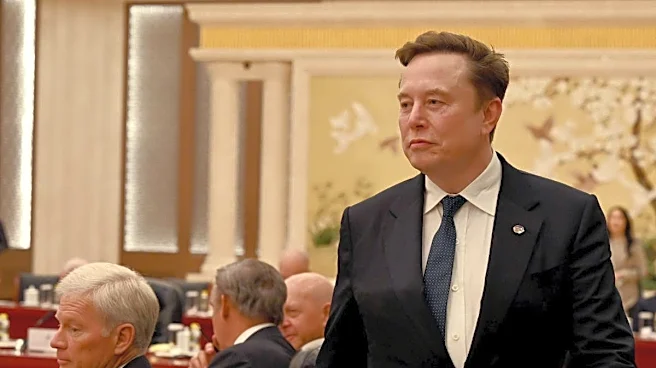
Elon Musk: First-Principles Revolution
Edwin Land didn’t try to improve existing film; he reinvented photography from scratch. This is the essence of first-principles thinking, a method Elon Musk champions today. Instead of accepting that rockets were expensive, Musk asked what they were made of and discovered he could build them for a fraction of the cost. This mirrors Land’s approach of ignoring conventional wisdom and solving problems from their absolute fundamentals. While Land was obsessed with the physics of light and chemistry, Musk is obsessed with the physics of rocketry and battery technology. Both demonstrate a relentless drive to vertically integrate and tackle impossibly hard engineering challenges to create products and industries the world didn't know it needed, from instant photos to reusable rockets.
Jensen Huang: Building the Unseen Future
For decades, Jensen Huang’s NVIDIA was known primarily as a company that made graphics cards for gamers. But Huang was playing a much longer game. Like Land, who spent fortunes on R&D for technologies with no obvious immediate market, Huang invested deeply in parallel processing and AI acceleration long before the current boom. He wasn't just improving graphics; he was building the foundational infrastructure for a new era of computing. This foresight—the ability to see what a technology could be and build the tools before the world realizes it needs them—is a hallmark of Land’s genius. While Land created a market for instant photography, Huang quietly built the engine that now powers the entire AI revolution, turning a niche gaming product into an essential global utility.
James Dyson: The Relentless Inventor
James Dyson’s story is a modern parable of the inventor-entrepreneur. After creating over 5,000 prototypes, he perfected a bagless vacuum that legacy manufacturers rejected because it would disrupt their business model of selling replacement bags. So, like Land, he built his own company to bring his invention to the world. This obsession with superior engineering and the refusal to compromise on product performance is pure Edwin Land. Land was a scientist first and a CEO second, known for performing an experiment every day. Dyson embodies this same spirit, investing heavily in R&D to fundamentally rethink everyday products, from vacuums to fans and hair dryers. Both founders prove that a radical improvement in user experience, driven by scientific obsession, can create a premium brand that commands immense loyalty.
Brian Chesky: Designing for Human Connection
Not every Land-like founder works with hardware. Brian Chesky, a trained industrial designer, co-founded Airbnb not just as a booking platform, but as a system built on a deep understanding of human experience. Land believed industry should discern and fill “deep human needs.” Chesky did just that, recognizing that travel wasn't just about finding a place to sleep, but about connection and belonging. He obsessed over designing trust between strangers, turning a risky behavior into a global movement. This focus on the emotional and user experience first—letting design lead the business rather than just decorate it—is a direct descendant of Land's philosophy. Just as Polaroid sold instant community, Airbnb sells the idea of belonging anywhere, proving that market-creating innovation can be rooted in empathy as much as in engineering.