






Nvidia: The AI 'Picks and Shovels' King
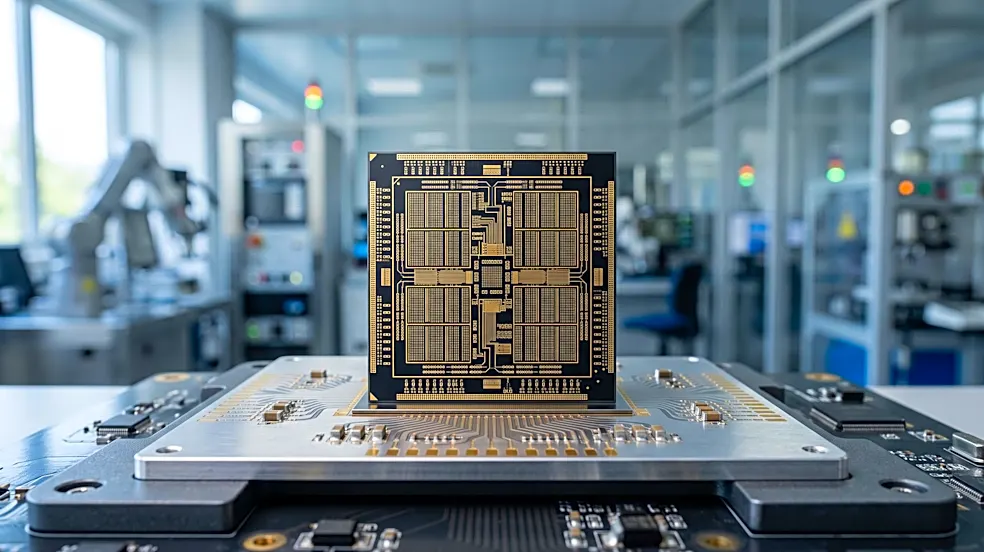
In any gold rush, the surest bet is selling picks and shovels. In the artificial intelligence revolution, Nvidia is that seller, and its shovels are Graphics Processing Units (GPUs). These chips are the foundational hardware for training and running complex
AI models, making them the most sought-after commodity in tech. This dominance is reflected in a staggering financial metric: gross margin. For its most recently reported quarter ending in July 2026, Nvidia posted a gross margin of roughly 75%. That means for every dollar of revenue, it keeps about 75 cents after accounting for the direct costs of producing its chips. This software-like profitability from a hardware company is nearly unprecedented and speaks to Nvidia’s immense pricing power. With a commanding market share and its CUDA software creating a deep ecosystem lock-in, customers like Microsoft, Google, and Meta have have little choice but to pay a premium for Nvidia's essential technology.
Microsoft: The Landlord of the AI Gold Mine
If Nvidia sells the tools, Microsoft owns and operates the mine itself. Through its Azure cloud platform, Microsoft provides the vast infrastructure—data centers, networking, and software services—that companies need to build and deploy AI applications at scale. Instead of a one-time hardware sale, Microsoft's model is about recurring revenue from renting its cloud resources. The key metric here is cloud margin. While Microsoft doesn't break out Azure's gross margin specifically, its broader Intelligent Cloud segment operates with a different financial profile. The massive capital expenditures required to build and maintain a global network of data centers, including a recent push into custom AI chips, weigh on its margins. As a result, Microsoft Cloud's gross margins were reported at 65% in a recent quarter, with pressure noted from scaling AI infrastructure. This figure, while healthy, is structurally lower than Nvidia’s because it accounts for the immense ongoing costs of running a global service platform.
Hardware Profits vs. Platform Power
Comparing Nvidia’s 75% gross margin to Microsoft's cloud margins reveals two fundamentally different business models, not a simple winner and loser. Nvidia's strategy is focused on maximizing value capture on each unit sold. Its fabless model, where it designs chips but outsources manufacturing to partners like TSMC, allows it to avoid the heavy costs of running foundries. This creates a high upfront profit on a product with a defined lifecycle. Microsoft, on the other hand, is playing a longer, stickier game. Its lower margins reflect a strategy of customer integration and ecosystem control. While the profit on any single transaction is less, the goal is to become the indispensable platform where customers build their entire AI-powered businesses, from startups to Fortune 500 companies. This creates a durable, recurring revenue stream that is much harder for a customer to switch away from than a hardware supplier.
The Sustainability Question
The central question for investors and the industry is whether these dynamics can last. Nvidia’s 'super-cycle' margins face threats from multiple angles. Competitors like AMD and Intel are racing to catch up, and major customers, including Microsoft itself, are developing their own custom AI chips to reduce their dependency on a single supplier. As the AI market shifts from model training to the less-intensive task of inference (running the models), demand may shift toward more cost-efficient hardware, squeezing Nvidia’s pricing power. For Microsoft, the challenge is different. Its massive infrastructure spending is a bet that it can efficiently monetize its AI services like Copilot and Azure OpenAI services over the long term. The company must prove it can manage the high costs of the AI buildout and eventually improve margins as its platform scales and becomes more efficient. Azure's recent growth, surpassing a $100 billion annual revenue run rate, suggests this strategy is bearing fruit.