





A 'Social Streamer' No One Asked For
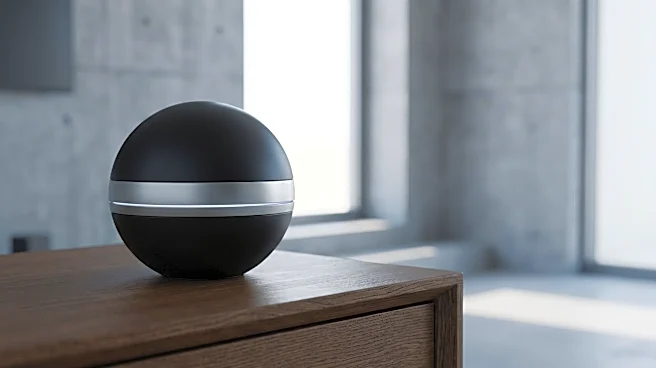
Unveiled at the Google I/O conference in 2012, the Nexus Q was a striking piece of industrial design. A heavy, matte-black orb that looked more like a sci-fi prop than a piece of home electronics, it promised a new “social” way to consume media. The idea
was that you and your friends could collectively create a media playlist, adding songs and videos from your own Android devices. The device itself had no real user interface; your phone or tablet was the remote control. It was a bold concept, born from Google's desire to own the living room. However, the initial excitement quickly gave way to confusion. The core function was to stream content, but its capabilities were bizarrely limited.
The Walled Garden Was Too Small
The Nexus Q's biggest and most immediate problem was its closed ecosystem. It could only play content from three sources: Google Play Music, Google Play Movies & TV, and YouTube. That was it. In an era when competitors like Roku and Apple TV were already offering access to powerhouse services like Netflix, Hulu, and Pandora, Google's device felt like a step backward. For a product marketed as a social hub, it was incredibly restrictive. Users couldn't stream their own local media files, nor could they access the most popular streaming apps on the market. It was a solution in search of a problem, a beautiful piece of hardware that did shockingly little.
A Price That Defied Logic
Perhaps the most baffling decision of all was the price tag. The Nexus Q was set to sell for $299. To put that in perspective, at the time, an Apple TV cost $99 and a Roku box could be had for as little as $50. Google justified the premium price by highlighting its “audiophile-quality” 25-watt amplifier and the fact that it was manufactured entirely in the USA—a point of pride for the company. But for consumers, it was a non-starter. The device didn't even come with the necessary speakers or cables, which Google intended to sell separately for an additional $399 and $49, respectively. The market reaction was swift and brutal: the product was widely panned as wildly overpriced for its limited functions.
The Quick Death and Lasting Lessons
The backlash was so severe that Google never even gave the Nexus Q a full commercial release. Just a month after its announcement, the company postponed the launch indefinitely, sending free units to those who had pre-ordered. By early 2013, the product was quietly shelved for good. Yet, the failure wasn't in vain. The core concepts of the Nexus Q—a headless media player controlled by a phone—were refined and reborn a year later in the Chromecast. The Chromecast did everything the Q was supposed to do, but it was open to third-party apps, incredibly simple to use, and launched at an impulse-buy price of just $35. The Chromecast was a massive success, proving that Google had learned the right lessons from its ambitious, beautiful, and utterly misguided failure. It was a classic case of failing forward, and the company's hardware division is stronger for it.