



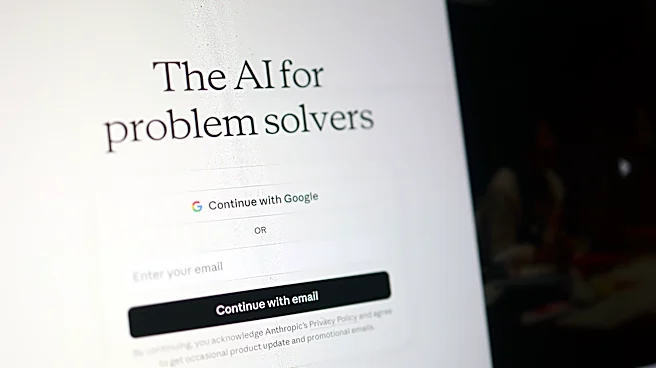
The conversation about AI's role at work often feels like a blurry, far-off storm. Yet, specific tools are already making precise impacts. One name that keeps surfacing in professional circles is Claude. Here's why it's different.
What Exactly Is Claude?
Claude is a family of
large language models created by Anthropic, a San Francisco-based AI company founded in 2021 by former senior members of OpenAI. Anthropic's stated mission is to build reliable and steerable AI systems, with a heavy emphasis on safety. This is embodied in its 'Constitutional AI' training method, where the model is guided by a set of principles to be helpful and harmless, drawing from sources like the UN's Declaration of Human Rights. Unlike some of its peers, which are often presented as all-purpose creative partners, Claude has carved out a reputation as a specialist for complex reasoning and professional tasks. It's less the 'Swiss Army knife' of consumer AI and more like a fountain pen: a tool designed for a specific kind of thoughtful, analytical work.
Its Superpower: A Massive 'Working Memory'
Claude’s key differentiator is its exceptionally large 'context window'. Think of a context window as the AI's short-term memory—it’s all the information it can hold and process in a single conversation. While many models can handle a few pages of text, Claude's latest versions can process up to a million tokens, which translates to roughly 750,000 words. This is the equivalent of digesting an entire book, a full software codebase, or a massive stack of legal contracts in one go. This capability is a game-changer for professionals who work with dense information. Instead of feeding an AI small chunks of a document and losing the plot, a user can upload the whole thing and ask questions that require a holistic understanding of the material.
Where It's Making a Real Impact
The AI shift isn't uniform; it's happening in specific departments and roles where Claude's strengths are a perfect fit. In the legal field, paralegals and lawyers use it to summarize and analyze thousands of pages of contracts or case law in minutes, identifying conflicting terms that a manual review might miss. In finance, analysts feed it lengthy financial reports to extract key data points and model scenarios. And in software development, engineers use it to understand and debug complex codebases or even automate routine coding tasks. It's also being adopted by HR and operations teams to draft detailed Standard Operating Procedures (SOPs) and employee handbooks, ensuring consistency with company tone and policies. These aren't abstract future scenarios; they are active use cases driving efficiency in knowledge-intensive industries.
Augmenting Workers, Not Just Replacing Them
While fears of AI-driven job loss are common, current data suggests a more nuanced reality of augmentation. Research from MIT Sloan and the U.S. Census Bureau shows that AI is primarily changing tasks within jobs rather than eliminating entire roles. Claude is a prime example of this trend. By handling the heavy lifting of information synthesis, it frees up professionals to focus on higherer value work like strategy, critical thinking, and client relationships. An analysis by Anthropic found that 52% of usage patterns showed the AI augmenting human tasks, versus 45% showing full automation. For many American workers, the integration of tools like Claude isn't about being replaced; it's about getting a powerful assistant that can manage the data deluge, allowing them to do their core jobs better and faster.