








From Mathematician to Naval Pioneer
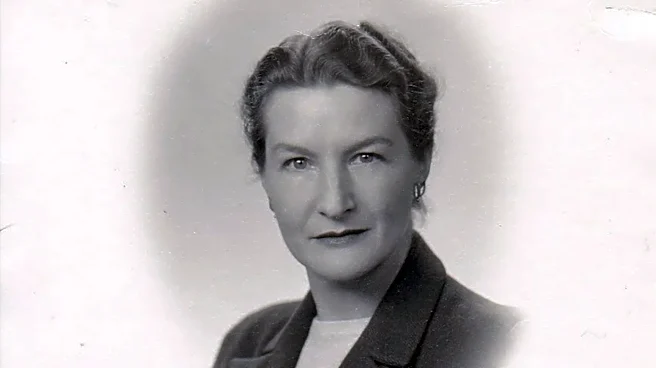
Long before she was a tech icon, Grace Brewster Murray Hopper was an academic with a PhD in mathematics from Yale, teaching at Vassar College in the 1930s. When World War II broke out, she joined the U.S. Navy Reserve, a move that would reroute her life's
work. Assigned to the Bureau of Ordnance Computation Project at Harvard University, she became one of the first programmers of the Mark I computer, a massive electromechanical calculator. In this era, programming was a tedious, manual process. It involved physically wiring circuits or meticulously plotting instructions in raw machine code—a language of numbers and symbols only a handful of specialists could understand. Hopper and her colleagues were brilliant at it, but she quickly realized the immense bottleneck this process created. Computers were powerful, but only if you could speak their alien tongue.
The 'Impossible' Idea: A Language Translator
Hopper's groundbreaking idea was deceptively simple: What if programmers could write instructions in something resembling English, and have the computer translate those words into the complex machine code itself? She envisioned a program she called a “compiler.” The concept was met with immediate and widespread skepticism. The prevailing wisdom was that computers were for arithmetic, not language. “They told me computers could only do arithmetic,” she later recalled. The notion that a machine could understand and process symbolic, human-readable language seemed like science fiction. Many of her peers dismissed the idea as a fantasy, believing the complex work of translating programming instructions was a uniquely human intellectual task.
Proving Them Wrong with A-0 and COBOL
Undeterred, Hopper built it anyway. In 1952, she developed the A-0 system, the first compiler. It was a primitive but revolutionary program that translated mathematical code into machine-readable instructions, proving that a computer could, in fact, program itself. Even with a working model, adoption was slow. “I had a running compiler and nobody would touch it,” she famously said. Hopper spent years demonstrating and evangelizing her work. Her persistence paid off. Building on the principles of the A-0, she led the development of FLOW-MATIC, the first programming language to use English-like commands. This work became the direct foundation for COBOL (Common Business-Oriented Language), which debuted in 1959. Developed by a committee with Hopper as a key technical consultant, COBOL was designed to be machine-independent and user-friendly, opening the door for businesses to adopt computers for payroll, inventory, and administrative systems.
The Enduring Legacy of 'Amazing Grace'
Grace Hopper’s impact extended far beyond the compiler. She eventually retired from the Navy as a Rear Admiral, the oldest serving officer at the time. She became a celebrated public speaker, known for her wit and her relentless advocacy for innovation. She famously used a piece of wire about a foot long to illustrate a nanosecond—the distance light travels in one billionth of a second—to explain why speed matters in computing. One of her most famous quotes, “The most dangerous phrase in the language is, ‘We’ve always done it this way,’” became a mantra for generations of innovators. Her insistence on user-friendly design and machine-independent languages is the bedrock of modern computing. Every time you use an app, browse a website, or interact with software written in a high-level language like Python or Java, you are benefiting from the revolution she started. She didn’t just invent a tool; she fundamentally changed our relationship with technology.