








The Price of an AI Revolution
On the surface, Microsoft is firing on all cylinders. The company’s Azure cloud platform continues its rapid expansion, growing 40% in the most recent quarter, fueled by relentless demand for AI services. This success, however, comes with an eye-watering
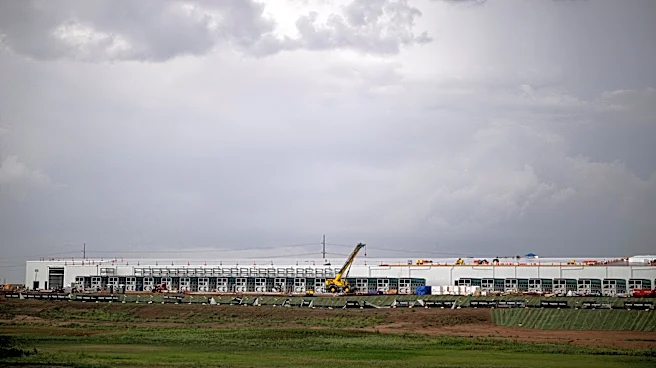
price tag. To power the AI models behind tools like Copilot, Microsoft is engaged in one of the largest infrastructure build-outs in corporate history. For the 2026 calendar year, the company is projected to spend a colossal $190 billion on capital expenditures, or CapEx. That figure, larger than the entire economy of many countries, is almost entirely dedicated to building the data centers and buying the specialized chips needed to lead the AI race.
Following the Money: What Is CapEx?
For most of its history, Microsoft enjoyed the beautiful economics of software: write code once, sell it infinitely with minimal extra cost. AI changes that. Now, growth is directly tied to massive physical infrastructure. Capital expenditures are long-term investments in assets like buildings and equipment. They don't hit the main income statement directly, which is why the spending can feel “hidden.” Instead, the cost is spread out over the asset's useful life through depreciation. However, the cash goes out the door immediately, which is why investors are watching Microsoft’s free cash flow so nervously. In one recent quarter, about two-thirds of the company's CapEx went toward “short-lived” assets—code for the thousands of powerful, and expensive, GPUs that are the engines of AI.
The Billion-Dollar GPU Habit
At the heart of this spending are Graphics Processing Units (GPUs), primarily from designer Nvidia. Originally made for video games, these chips are uniquely suited for the parallel processing required to train and run large AI models. The demand is so ferocious that a single high-end server equipped with the latest GPUs can cost a small fortune. This has triggered a global arms race among cloud giants like Microsoft, Google, and Amazon to secure as many of these chips as possible. Microsoft’s spending spree is a strategic necessity to ensure it has the capacity to meet the explosive demand for its Azure AI services and Copilot assistants, which have already surpassed 20 million paid users.
An Arms Race in the Cloud
Microsoft isn't spending in a vacuum. Its primary cloud rivals, Amazon Web Services (AWS) and Google Cloud, are also investing billions to build out their own AI capabilities. This competitive pressure forces Microsoft to spend aggressively just to keep pace, let alone lead. The company has stated that demand for its AI services currently outstrips its available supply, making the massive CapEx a requirement to capture future growth. The strategy is to build a dominant platform that developers and businesses are locked into. This is reflected in Microsoft’s remaining performance obligation (RPO)—a measure of contracted future revenue—which has surged, indicating that customers are signing long-term deals for cloud and AI services.
A High-Stakes Bet on Tomorrow
Ultimately, this mountain of spending is a calculated gamble. Microsoft is betting that the revenue generated from AI services over the next decade will more than justify the unprecedented upfront investment. It's a fundamental shift from an asset-light software company to a capital-intensive infrastructure giant. While the spending pressures margins and cash flow today, the company sees it as the cost of admission to dominate the next era of computing. The bet is that by building the most powerful and comprehensive AI cloud, it will become the essential utility for businesses everywhere, turning today's massive expense into tomorrow's enduring profits.